Ao socorrer Bolsonaro quando este enfrentava um forte fogo nutrido vindo do STF, Michel Temer foi saudado como um gran- de constitucionalista, um pacificador, por setores políticos, analistas e jorna- listas da grande mídia. A saudação não causou estranheza, pois a política bra- sileira se move sob a égide da hipocrisia. Nunca se diz o que deve ser dito. As coi- sas nunca são apresentadas como real- mente são. A farsa e a mentira prevale- cem. Bolsonaro é apenas a face radica- lizada da histórica cultura da hipocri- sia política no Brasil. Aqui, os hipócri- tas não precisam de esforço para dissi- mular ou fingir, pois sabem que, quan- do quase todos os gatos são pardos, ne- nhum acusa ou denuncia o outro.
Pois bem: Michel Temer é um traidor do Brasil e de seu povo. Socorreu outro traidor da pátria, que é Bolsonaro. Não é a primeira vez: em 1999, quando Bolsona- ro propôs fuzilar o então presidente Fer- nando Henrique Cardoso e mais “uns 30 mil”, foi socorrido e salvo da cassação por Temer. Em nenhum país democrático do mundo um parlamentar que propusesse fuzilar um presidente ou primeiro-mi- nistro ficaria com seu mandato. Naquela ocasião, Temer traiu a democracia, a deis- cência, o decorro parlamentar e a própria Câmara dos Deputados.
vavelmente a maior, consistiu em enga- nar a presidenta Dilma Rousseff e o PT, partido com o qual tinha feito uma alian- ça em nome do PMDB. Seu comparsa de traições, Eduardo Cunha, testemunhou que Temer liderava as articulações do impeachment-golpe três meses antes do processo. Segundo Cunha, não foi uma participação qualquer: Temer foi líder da conspiração que levou à deposição de Dil- ma, mergulhou o Brasil numa crise polí- tica interminável e proporcionou a vitó- ria de Bolsonaro em 2018.
Não contente com a sua traição, como presidente-usurpador, Temer também en- ganou os trabalhadores brasileiros, enca- minhando uma reforma que tirou direi- tos e agravou o desemprego e a pobreza. A reforma foi contra o espírito e a letra da Constituição de 1988, assentados na ga- rantia de direitos, não só civis e políticos, como também sociais. A Constituição co- locou-se em linha com a Declaração de Di- reitos da ONU, ao entender que os direitos sociais e trabalhistas também integram os Direitos Humanos.
Agora, Temer deu mais um passo na sua ignominiosa história de vilanias e traições. Apresentou-se como um es- pírito maligno para proteger o grande mal que é Bolsonaro. Salvou Bolsona- ro, que converteu o Brasil numa vas- ta arena de ódios, um vale de intrigas e mentiras, uma necrópole onde são se- pultados os corpos e os sonhos de qua- se 600 mil pessoas que não tiveram o socorro e os cuidados necessários que o Estado e o governo tinham a obriga- ção de lhes prestar. O Brasil tornou-se essa necrópole onde não são sepultados apenas corpos, mas o próprio espírito moral da nação, degradada por um pre- sidente indigno, vil, insensível e impie- doso, que debocha dos vivos e dos mor- tos e trai diariamente a Constituição.
Temer associa-se criminosamente a essa traição. Se Temer fosse constitu- cionalista, denunciaria as violações que Bolsonaro perpetra. Socorremo-nos aqui de Ulysses Guimarães. Ao promul- gar a Constituição disse: “Quanto a ela (a Constituição), discordar, sim. Diver- gir, sim. Descumprir, jamais. Afrontá-la, nunca. Traidor da Constituição é traidor da Pátria. Conhecemos o caminho maldi- to: rasgar a Constituição, trancar as por- tas do Parlamento, garrotear a liberda- de, mandar os patriotas para a cadeia, o exílio, o cemitério”. Logo adiante, Ulys- ses completou dizendo que “temos ódio à ditadura. Ódio e nojo”.
O “grande constitucionalista” Temer dispôs-se a ajudar Bolsonaro a reabrir o caminho maldito que leva à invasão do STF e do Senado, ao fechamento das por- tas do Parlamento, que aprofunda o vale do ódio e da morte e que transforma o Bra- sil num deserto moral.
Enquanto Temer se especializou na ar- te da traição, Bolsonaro se especializou na arte da esperteza dos covardes. Foi in- disciplinado no Exército, chegando a pre- parar atentados terroristas. Expulso pe- lo Exército foi salvo pelo Superior Tribu- nal Militar. Ao ameaçar fuzilar FHC e mi- lhares de brasileiros, foi salvo por Temer. Ao defender torturadores, ditadores, pro- ferir injúrias raciais e ofender mulheres, sempre contou com a complacência dos liberais e das esquerdas. O próprio FHC confessou recentemente que não o leva- va a sério. Quem acredita agora na boa- -fé da sua carta à nação? É mais uma far- sa da sua esperteza criminosa. Bolsonaro precisa ser destituído e Temer precisa ser designado por aquilo que é: um traidor da Constituição e da Pátria. •
For weeks, President Jair Bolsonaro of
Brazil has been urging his supporters to take to the streets. So on
Sept. 7, Brazil’s Independence Day, I was half expecting to see mobs of
armed people in yellow-and-green jerseys, some of them wearing furry
hats and horns, storming the Supreme Court building — our very own
imitation of the Capitol riot.
Fortunately,
that was not what happened. (The crowds eventually went home, and no
one tried to sit in the Supreme Court justices’ chairs.) But Brazilians
were not spared chaos and consternation.
For Mr. Bolsonaro, it was a show of force. In the morning, addressing a crowd of around 400,000 people in Brasília, he said he intended to use the size of the crowd as an “ultimatum for everyone”
in the three branches of government. In the afternoon, at a
demonstration in São Paulo of 125,000 people, the president called the
elections coming in 2022 “a farce” and said that he will no longer abide by rulings from one of the Supreme Court justices. “I’m letting the scoundrels know,” he bellowed, “I’ll never be imprisoned!”
It seems to be part of a plan. By picking a fight in particular with the Supreme Court — which has opened several investigations
of him and his allies, including about his role in a potentially
corrupt vaccine procurement scheme and his efforts to discredit Brazil’s
voting system — Mr. Bolsonaro is attempting to sow the seeds of an
institutional crisis, with a view to retaining power. On Sept. 9 he
tried to back down a little, saying in a written statement that he “never intended to attack any branch of government.” But his actions are plain: He is effectively threatening a coup.
Perhaps that’s
the only way out for Mr. Bolsonaro. (Apart from properly governing the
country, something that apparently doesn’t interest him.) The antics of
the president, struggling in the polls and menaced by the prospect of
impeachment, are a sign of desperation. But that doesn’t mean they can’t
succeed.
That has taken its toll on Mr. Bolsonaro’s standing with Brazilians. In July, his disapproval rating rose to 51 percent,
its highest-ever mark, according to Datafolha Institute. And ahead of
next year’s presidential elections, things are not looking rosy. In
fact, polling suggests he’s going to lose. Luiz Inácio Lula da Silva, the center-left politician and former president, is comfortably outstripping Mr. Bolsonaro. As things stand, Mr. Bolsonaro would lose to all possible rivals in a second-round runoff.
This
explains Mr. Bolsonaro’s eagerness to push unfounded claims of fraud in
Brazil’s electronic voting system. “There’s no way of proving whether
the elections were rigged or not,” he said
about past elections (including the one he won), during a two-hour TV
broadcast in July, while failing to provide any evidence to support his
allegations. He has repeatedly threatened to call off the elections if the current voting system remains in place — and although Congress recently rejected his proposal to require paper receipts, he continues to cast doubt on the voting process. (Sound familiar, anyone?)
Then there’s the corruption. A growing number of corruption accusations
have been made against the president and two of his sons, who both hold
public office. (One is a senator; the other sits on Rio de Janeiro’s
City Council.) Prosecutors have suggested that the Bolsonaro family took
part in a scheme known as “rachadinha,” which involves hiring close associates or family members as employees and then pocketing a portion of their salary.
For Mr.
Bolsonaro, who was elected in part for his promise to rout out
corruption, these investigations cast a long shadow. Against this
backdrop of ineptitude and scandal, the events of Sept. 7 were an
attempt to distract and divert attention — and, of course, to cement
divisions.
Efforts to remove Mr. Bolsonaro by parliamentary means are stalled. Though the opposition has so far filed 137 impeachment requests, the process must be initiated by the speaker of the lower house, Arthur Lira, who does not seem inclined
to accept them. (That’s not especially surprising: Mr. Lira is a leader
of a cluster of center-right parties, known as the “centrão,” to whom
Mr. Bolsonaro has handed out
important government positions, in the hope of shielding himself from
impeachment proceedings.) Only enormous public protests can break the
impasse.
There’s no time to lose. The
demonstrations last week were not simply political showmanship. They
were yet another move to strengthen Mr. Bolsonaro’s position for an
eventual power grab ahead of next year’s elections. He didn’t get
exactly what he wanted — the numbers, though substantial, were far less than organizers hoped for — but he will keep trying.
Sept.
7 now marks another signal moment in Brazil’s history — when the
totalitarian aims of our president became unmistakably clear. For our
young democracy, it could be a matter of life or death.
Kabul—Throughout the last week of August, I was asked
constantly about the situation outside Kabul’s Hamid Karzai
International Airport. It’s all any TV station, radio, or podcast wanted
to talk to me about. The grim images of devastation and desperation
coming from there managed finally to gain the attention of people in the
West, who for years had ignored the two-decade-long occupation, which
was presumably launched for their safety. Or for Afghan women. Or for
democracy.1
Or… something.2
People were fixated on the horrific images. Young men desperately
clinging to a US military plane as it takes off. Taliban- and CIA-backed
Afghan intelligence forces shooting round after round into the air to
disburse hundreds of frantic men, women, and children. Thousands of
families squatting in squalor in dirt fields outside the gates of the
airport for days at a time.3
What they failed to see was that all these images were literal,
physical embodiments of the failures of the past 20 years of foreign
intervention in Afghanistan.4
It wasn’t supposed to be this way. Not according to the politicians
and generals who beat the drums of war. “As we strike military targets,
we will also drop food, medicine and supplies to the starving and
suffering men and women and children of Afghanistan,” George W. Bush
said when he announced the launch of what the United States dared to
call “Operation Enduring Freedom.”5
But freedom did not endure in Afghanistan. At least not the way it was supposed to.6
The past 20 years have been rife with allegations of electoral fraud,
corruption, nepotism, human rights abuses, and targeted killings. The
food, medicine, and supplies largely bypassed the most vulnerable
members of Afghan society while kleptocrats and warlords filled their
pockets and expanded their real estate portfolios.7
he progress that we did make has quickly dissipated since the
government managed to lose more than two dozen provinces in the span of
11 days and former President Ashraf Ghani and his cronies, mostly
unqualified dual-passport holders, fled the country, allowing the
Taliban to walk into Kabul. Veteran Afghan journalists, artists, and
entrepreneurs are now in France, the United Kingdom, the United States,
and Canada. Shops and restaurants created by enterprising young Afghans
have either been shuttered or are virtually empty.8
In an odd turn, the Westerners and the elites, who spent almost their
entire existence in very specific bubbles of Kabul, are now screaming
online, “Won’t somebody please think of the provinces?” People who for
years excused or ignored the night raids, air strikes, drone attacks,
and unlawful detentions carried out by foreign and Afghan forces are
suddenly incensed that no one is covering potential abuses in rural
areas.9
When the Afghan Air Force hit a madrassa in Kunduz in 2018, killing
dozens of children, they reasoned it away, saying, “‘Collateral damage’
happens” or “Those children would have grown up to be Talibs anyway.”10
When the Médecins Sans Frontières hospital, also in Kunduz, was
destroyed in 2015 by a US air strike, they said, “I heard Taliban were
being treated in that hospital,” as if that were a justification for
bombing a health facility.11
When the Trump administration dropped the so-called Mother of
All Bombs on a village in Nangarhar, no one protested or bothered to
ask why the world’s largest non-nuclear weapon was being used in a
remote corner of eastern Afghanistan.12
But now the quality of life in Nangarhar and Kunduz matters to so
many people on Twitter. Why? Because now those abuses are likely to be
carried out by the Taliban, not by the people who were once signing the
checks and divvying up the chairs in the Presidential Palace and various
ministries. Not by the freedom-bringing forces of the US war machine.13
But, as all of this was going on, millions of Afghans were
watching—when they weren’t being blown up by IEDs and drones. They
watched as people stuffed ballots and ran off to the countries they came
from when they fell under suspicion of corruption or when the Taliban
got too close to their armored cars and their houses hidden behind
concrete blast walls. They watched as the Taliban staged a bloody,
vicious offensive on the Afghan land under the guise of fighting an
occupation. And, most recently, they watched as the Taliban traipsed
into city after city—Herat and Kandahar, and then14
Mazar-i-Sharif and Jalalabad, and finally Kabul—and the people in
power, who were supposed to defend and reassure them, kept quiet for 11
days. In all that time, none of Afghanistan’s “leaders” dared to utter
the name of even one province that had fallen to the enemy the US had
come to oust 20 years ago.15
The people saw their country crumble as fat cats screaming
“Country or coffin!” scrambled to get Covid-19 tests and book tickets to
Istanbul, Dubai, and New Delhi. As their flights took off, the
territories continued to fall, and now there is radio silence from those
people, who had spent hours breathlessly espousing the greatness of
their republic on social media.16
That social media obsession had kept them from seeing the streets
they whizzed passed in their armored cars on their way to their
well-guarded homes or to the trashy parties with cheap alcohol, bad
music, and shadily sourced drugs where they, the people running the
country, hobnobbed, preferring to speak English and German in an effort
to hide their marginal Pashto and Dari.17
They danced while villages burned.18
They drank while drought forced thousands from their homes.19
Then came the Taliban, with their guns in hand, and who was left? The
Afghan people. The ones who saw little of the financial and political
spoils of 20 years of occupation. The ones whose roads are lined with
Taliban-planted IEDs and whose skies are riddled with drones delivering
death from above.20
While the newly rich and fleetingly famous hightailed it out
of Kabul, the poor were abandoned. Left to the Taliban. So they had
little choice but to flock to the airport, clinging to any hope that
they could make it out of the land where the elites and their American
benefactors had managed to bring the Taliban back to the doorsteps of
the people.21
Two decades ago, George W. Bush set out to oust the Taliban, claiming
to bring freedom and democracy in their overthrow. Now, almost exactly
20 years later, democracy has withered under the weight of fraud and
corruption, and the US is packing up its bags as the Taliban set down
theirs in the Presidential Palace.22
The
Taliban observed the 20th anniversary of 9/11 in startling fashion.
Within a week of the United States’ announcement that it would withdraw
its forces from Afghanistan on September 11, the Taliban had taken over
large parts of the country, and on August 15, the capital city of Kabul
fell. The speed was astonishing, the strategic acumen remarkable: a
20-year occupation rolled up in a week, as the puppet armies
disintegrated. The puppet president hopped a helicopter to Uzbekistan,
then a jet to the United Arab Emirates. It was a huge blow to the
American empire and its underling states. No amount of spin can cover up
this debacle.1
A little more than a year before the 9/11 attacks, Chalmers Johnson,
the West Coast historian and onetime supporter of the Korean and Vietnam
wars, and a CIA consultant to boot, published a prescient book titled Blowback: The Costs and Consequences of American Empire.
The book, which was virtually ignored when first published but later
became a best seller, reads as both an eerie prologue and searing
epitaph for the past 20 years. “Blowback,” as Johnson warned,2
is shorthand for saying that a nation reaps what it sows, even if it
does not fully know or understand what it has sown. Given its wealth and
power, the United States will be a prime recipient in the foreseeable
future of all the more expectable forms of blowback, particularly
terrorist attacks against Americans in and out of the armed forces
anywhere on earth, including within the United States.3
Twenty-four hours after that blowback stunned the planet on 9/11,
with sympathy messages pouring in from every capital—including
Havana—the recently deceased war criminal Donald Rumsfeld declared at a
meeting of the National Security Council that recalcitrant states,
regardless of their involvement in 9/11, should pay the price.
Accordingly, he suggested, “Why shouldn’t we go against Iraq, not just
Al Qaeda?” The next day, Paul Wolfowitz, the No. 2 at the Department of
Defense, amplified this message by urging a “broad and sustained
campaign” that would include “ending states who sponsor terrorism.”
Within a week, the Great Decider himself, George W. Bush, had
greenlighted an all-out war: “Let’s hit them hard. We want to signal
this is a change from the past. We want to cause other countries like
Syria and Iran to change their view.”4
Then the usual minions stepped in. Interviewed by David Remnick for The New Yorker,
Dennis Ross, the US director of the Israeli-Palestinian “peace
process,” was insistent: “We can’t just do the usual thing—bomb a few
targets, if it turns out to be Osama Bin Laden. If we respond the same
old way, nothing will change.” Not to be outdone, the neocon Charles
Krauthammer defended the invasion of Afghanistan two weeks later in his Washington Post column: “We are fighting because the bastards killed 5,000 [sic]
of our people, and if we do not kill them, they are going to kill us
again. This is a war of revenge and deterrence…. The liberationist talk
must therefore be for foreign consumption.”5
Notably, these “bastards” and “enemies” did not include Saudi Arabia
and Egypt, the two countries from which most of the 9/11 terrorists
hailed. For years, wealthy Saudis had provided “fertile fund-raising
ground” for Al Qaeda, according to none other than The9/11 Commission Report.
They had, in some cases, grown up with bin Laden, whose father was a
habitué of their palaces and had founded the construction firm that
built some of them. During an early NSC discussion, an attack on Iraq
was considered, but Bush, Rumsfeld, and Dick Cheney finally opted for a
crude war of revenge against Afghanistan, where bin Laden and others in
Al Qaeda’s leadership were lodged courtesy of the Taliban government,
which itself had been maneuvered into place by the Pakistani military
with the approval of the United States in 1994, several years after the
Soviet Union withdrew its troops.6
The Taliban were quite prepared to hand over their guests to the
United States, but they needed a fig leaf and asked politely for
evidence, some proof of Al Qaeda’s involvement. The White House was in
no mood for legal niceties. A short delay was permitted to enable
Pakistan to withdraw its military personnel from Afghanistan. Operation
Enduring Freedom commenced in October 2001. The Taliban, on Pakistani
military advice, mounted a paltry resistance. Their one-eyed leader,
Mullah Omar, was last reported fleeing a central Afghan village on a
motorbike, like Steve McQueen in The Great Escape. When US
troops finally reached Al Qaeda’s hideout in the caves of Tora Bora, the
leadership had fled. Both Omar and bin Laden, plus their crews, found
refuge in Pakistan, where the country’s military leaders advised the
Taliban to bide its time. The US and all its NATO allies, as well as
Russia and China (good friends at the time), backed the war and the
occupation of Afghanistan—the Russians, no doubt, with an element of
schadenfreude.7
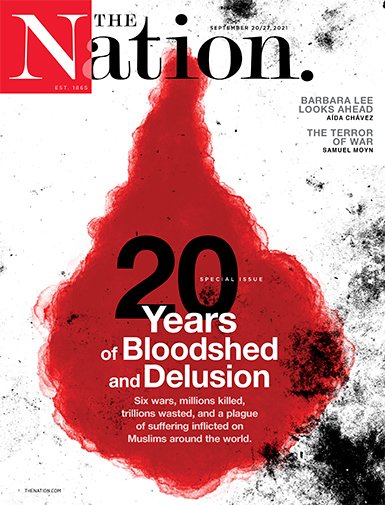
Twenty years later, the grim, bloody balance sheet of not
responding “the same old way” speaks for itself. Six wars, millions
killed, trillions wasted, and a plague of suffering and trauma inflicted
on the Muslim world, accelerating a tidal wave of refugees that has
created panic in the European Union and resulted in a huge increase of
votes for far-right parties—which in turn has pushed an already extreme
political center further to the right. Islamophobia, promoted by
politicians of every stripe in the West, is now embedded in Western
culture.8
“Oh may no more a foreign master’s rage /
With wrongs yet legal, curse a future age!” wrote Alexander Pope at the
dawn of the 18th century. Three hundred years later, the foreign master
has withdrawn its forces, admitting defeat, with the full realization
that the Taliban would soon be back in power. The war has been a huge
political and military catastrophe for the US and its NATO camp
followers. “Freedom” did not endure. The Taliban, which controlled
three-quarters of the country on the eve of the US invasion, now control
all of it.9
History is only modestly helpful for anticipating what happens next.
After the Soviet withdrawal in 1989, a weak pro-Moscow regime managed to
hold on to Kabul for some years before it was toppled, with US support,
and replaced by warring factions of the mujahideen. In 1994, the US
gave the go-ahead to a Pakistani-led Taliban intervention. Two years
later, the Taliban took over Kabul.10
The difference today is that there is no armed Cold War enemy as far
as the US is concerned. The Taliban, once Washington’s friend, then an
enemy, is now willing to be friends again. After all, the two have been
talking for over a decade.11
Meanwhile, in July, a senior Taliban delegation visited China
to pledge that Afghan soil would never again be used as a base to
attack China and, no doubt, to discuss future trade and investment
plans. Make no mistake, Beijing will replace Washington as the primary
foreign influence in Afghanistan. Since China enjoys warm relations with
Iran, we can hope that it will discourage rivalries between the
minority Hazaras and the majority Pashtuns that might lead to bloodshed.
Russia, for its part, will use its influence with other minorities to
avoid the kind of civil war that broke out after the Soviet withdrawal.
No outside power appears to want a repeat of that today. The US prefers
to exercise direct control via drones and bombing raids, as it did a day
after confirming the withdrawal from Afghanistan—to “buy time” for the
Afghan government, we were informed—and as it did at least twice since
the deadly ISIS-K airport attacks.12
Given that the Taliban has taken up residence in the presidential
palace in Kabul, what the US should do, together with its NATO allies,
is grant refuge and citizenship to all Afghans who want to leave the
country: a tiny reparation for an unnecessary war. Apart from that, the
US should leave the country well alone. Real change can come only from
within Afghanistan. It will take time, but it’s better than an invasion
by a major power. It’s too early to say how this will all pan out; we’ll
know better in six months.13
On February 15, 2003, knowing what was next and
harboring few illusions about their leaders, as many as 14 million
people marched on all seven continents against the impending war in
Iraq. Sanctions had already crippled the country, leading to the deaths
of hundreds of thousands of children (as many as half a million,
according to a 1995 Lancet analysis), a price that Madeleine
Albright, Bill Clinton’s secretary of state, had said was “worth
paying.” The largest demonstrations were in Rome (2.5 million), Madrid
(1.5 million), and London (1.5 million), while hundreds of thousands
marched in New York and Los Angeles, along with huge assemblies in most
state capitals.14
The largest gathering for peace ever seen in global history was
ignored by Bush, UK Prime Minister Tony Blair, and their cronies. Iraq
was pulverized and its leader subjected to a judicial lynching. Torture
by US soldiers (both men and women) was widespread, and triumphal rape
pics were bandied about. For many, this was the face of Western
civilization. At least half a million Iraqis died in the war. Baghdad’s
museums were looted, and the social infrastructure of the country was
devastated by bombing raids. These were war crimes, but they were “our”
war crimes, and so they were ignored, disregarding the judgments at
Nuremberg after the Second World War. In the War on Terror, it’s always
open season: shoot to kill, no trials necessary, and indefinite
imprisonment. Legal and moral values (“our way of life”) ceased to
exist. Depleted uranium munitions were deployed in Iraq and, later, in
Syria.15
Even before the war, of course, the United States had played fast and
loose with international legal norms. The sanctions on Iraq—which were
imposed in 1990, just before Bush I’s Gulf War, and remained until Bush
II’s invasion—constituted a war crime on their own. The target was the
civilian population; the goal was to incite a spontaneous popular
uprising. A senior British civil servant, Carne Ross, testified before a
parliamentary select committee in 2007 and admitted:16
The weight of evidence clearly indicates that sanctions caused
massive human suffering among ordinary Iraqis, particularly children.
We, the US and UK governments, were the primary engineers and offenders
of sanctions and were well aware of the evidence at the time but we
largely ignored it and blamed it on the Saddam government….17
Real history moves deep within the memory of a people but is always
an obstacle to imperial fantasists. There is now near-universal
agreement that the Western occupation of Iraq was an unmitigated
disaster—first for the people of Iraq, second for the soldiers sent by
scoundrel politicians to die in a foreign land. The grammar of deceit
utilized by Bush, Blair, and sundry neocon/neolib apologists to justify
the war has lost all credibility. Despite the embedded journalists and
nonstop propaganda, the bloody images refuse to go away; the immediate
withdrawal of all foreign troops was the only meaningful solution. While
the US has supposedly withdrawn, its planes are used occasionally to
bomb the country. A ghoulish reminder that if the Iraqi government
misbehaves, punishments will be forthcoming.18
Libya, despite its vast oil wealth, was another story,
but with its own grisly ending. Unlike the leaders of the Iraqi and
Syrian Baath parties, Moammar Gadhafi had balked at constructing a
proper social infrastructure, which would have gone a long way toward
dissolving tribal loyalties. He had given up on his nuclear program in
return for Western recognition and was feted in Western capitals. His
son secured his PhD at the London School of Economics—notwithstanding
claims of plagiarism—after which a generous donation was promptly
bestowed on the school. He also reportedly provided funds for Nicolas
Sarkozy’s presidential campaign in France.19
Gadhafi’s vices, eccentricities, and more serious failings
were on display in February 2011, during an Arab Spring–linked uprising.
He thought his new friends in the West would back him. The opposite was
the case: They had decided to get rid of him, and the opportunity
offered itself. But the story told by military humanitarians to justify
US intervention—that Gadhafi was bent on massacring his people—was based
in large part on an Al Jazeera report that the Libyan Air Force was
strafing demonstrators. This turned out to be a fiction, according to
congressional testimony by Defense Secretary Robert Gates and Adm.
Michael Mullen. Nor were there indiscriminate, large-scale massacres in
the cities of Misrata, Zawiya, and Ajdabiya when government forces
retook them. Gadhafi’s warning on March 17 that his forces would show
“no mercy” explicitly referred to the armed rebels in Benghazi, but he
offered amnesty and an escape route to Egypt for those who laid down
their weapons. Brutal though Gadhafi’s regime was, there is scant
evidence that NATO’s bombardment prevented “genocide” or “another
Rwanda” or, as President Obama put it, “a massacre that would have
reverberated across the region and stained the conscience of the world.”20
Unsurprisingly, there has never been a reliable accounting of
civilians killed during the six-month bombing campaign. The more
conservative estimates place the collective death toll—civilians,
rebels, Gadhafi’s fighters—at around 8,000. But an academic from SOAS
University of London, who had been advising the Foreign Office, placed
the toll closer to 20,000 to 30,000 people. NATO’s planes did not
protect civilians as they targeted Gadhafi’s forces. The dictator was
captured, tortured, and mob-lynched. Ever sensitive, Hillary Clinton
remarked, “We came. We saw. He died.” Pity. In other circumstances,
Gadhafi might well have funded the Clinton Foundation.21
After the collapse of an absurdist pro-business neoliberal
government—led initially by a Libyan exile in Alabama—post-Gadhafi Libya
was taken over by a loose coalition of Islamist militias, including
those linked to Al Qaeda. As in Iraq, the state had collapsed and a
civil war commenced. Black Africans were expelled in large numbers and
returned to their countries. Mali’s capital, Timbuktu, and much of the
Sahel were taken over by “refugee militias.” The French sent in troops.22
Meanwhile, there were more terrorist attacks: in London, in Paris, in
Mumbai, in Islamabad. The War on Terror had failed on every level—at
home as well as abroad. While the US military and its allies bombed and
droned their way across foreign lands, their governments were busy
waging war on civil liberties on domestic soil. From Guantánamo to the
maximum-security Communication Management Units in US prisons, from
secret surveillance programs to Donald Trump’s Muslim ban, the United
States has tracked and targeted its Muslim residents. Across the ocean,
Britain launched its own sprawling “anti-terror” regime, including a
program of indefinite detention within its state security prison,
Belmarsh, where at least one prisoner was driven mad and transferred to
Broadmoor, a high-security psychiatric hospital.23
Whistle-blowers who revealed the crimes in Iraq and elsewhere were
severely punished. Chelsea Manning was pardoned, but Edward Snowden, who
exposed the scale of the surveillance carried out by the National
Security Agency, had to flee the country. And Julian Assange remains in
Belmarsh prison, wondering whether the British judicial system will send
him to be entombed in a US security prison on the basis of a dangerous,
precedent-setting charge of violating the Espionage Act.24
Three months after Baghdad fell in 2003, Israeli Prime Minister Ariel
Sharon gave a speech at the White House congratulating Bush on the
“impressive victory” but urging him not to stop. Forward to Damascus and
Tehran: “It must be made clear…that their evil deeds cannot continue.”25
Those two capitals remain safe, but Syria is broken and Iran sanctioned. Where will freedom and democracy strike next?26
A caravana passou, com os cães latindo ao volante de caminhões, caminhonetes e (muitos) carros caros e (alguns) nem tanto, além de incontáveis motociclistas – tipos mal-encarados ao estilo Selvagens de Alphaville ou Demônios do Condomínio de Luxo – e muita gente a pé e em ônibus. Foi grande, não vou mentir: assisti da calçada, em Brasília, a um desfile que parecia interminável de gente disposta a derrubar a democracia em nome de um governo genocida e corrupto.
Mas, para imaginar o que virá a seguir, convém deixar a parada de bolsonaristas e as missivas de lado e olhar para as figuras que levaram Bolsonaro ao Planalto, e que vêm chamando muito menos atenção do que deveriam: o tal do Partido Militar. Os generais da reserva que escoltaram o indisciplinado ex-capitão à Presidência e que se movimentam para se manterem no poder – e com poder – enquanto Bolsonaro se dedica a aterrorizar o país com a ameaça de um autogolpe.
O que vai a seguir são informações recolhidas pelo boletim mensal com foco nas Forças Armadas brasileiras do Instituto Tricontinental que monitora a participação militar na política. O levantamento parte de informações públicas e é coordenado pela cientista social Ana Penido, também pesquisadora do Grupo de Estudos em Defesa e Segurança Internacional da Universidade Estadual Paulista, a Unesp.
Enquanto Bolsonaro latia ameaças ao Supremo Tribunal Federal, o vice-presidente Hamilton Mourão, general de quatro estrelas da reserva, se embrenhou numa série de palestras em que se apresentou como a voz da ponderação do governo. Falou numa live fechada ao grupo Parlatório, um ajuntamento de empresários, economistas, gente do mercado financeiro e advogados que montou um grupo no WhatsApp. Abriu a Conferência Anual sobre Macroeconomia e Estratégia no Brasil do bancão Goldman Sachs. Também deu uma série de entrevistas, entre elas a Carlos Alberto Di Franco, um jornalista ligado ao Instituto Millenium e à organização católica ultraconservadora Opus Dei, simpático a extremistas de direita e colunista de jornais como O Globo e Estadão – do qual diz ser também consultor.
Falando na imprensa, o ministro da Defesa, Walter Braga Netto, bateu um papo a portas fechadas com o jornalista Antônio Guerrero, vice-presidente de jornalismo da TV Record. A emissora da Igreja Universal, vale lembrar, recebe uma fatia generosa das verbas federais de publicidade. Talvez por isso, segue firme no apoio ao presidente. E Braga Netto subiu no palanque de onde no 7 de setembro Bolsonaro anunciou que não mais cumpriria decisões judiciais do STF.
Já que falamos de negócios: o general da reserva Luiz Eduardo Ramos, ministro-chefe da Secretaria-Geral da Presidência, recebeu em seu gabinete Alessandro Bruno Antunes Carvalho, diretor financeiro de uma startup mineira que afirma desenvolver "uma plataforma tecnológica envolvendo nióbio (uma obsessão de Bolsonaro) na preparação de nanomateriais avançados para soluções inovadoras em lifescience, energia e agronegócio".
Ramos, tido como o mais bolsonarista dos ex-fardados do Planalto, recebeu o empresário acompanhado do general de divisão Luis Antônio Duizit Brito. Apesar de ser militar da ativa com salário de R$ 20 mil mensais líquidos, Duizit Brito ocupa cargo de nomeação política no Ministério da Defesa: é diretor de Ciência, Tecnologia e Inovação. É apenas um dos mais de 2 mil militares da ativa e mais de 600 da reserva com uma boquinha em 70 órgãos da administração federal. O general Brito tem um carguinho à toa, que lhe rende um acréscimo de R$ 2 mil ao contracheque. Mas nem sempre é assim. Joaquim Silva e Luna, presidente da Petrobras, embolsa R$ 230 mil mensais pelo trabalho na estatal, que se somam aos R$ 30 mil da aposentadoria paga a generais de quatro estrelas como ele. Nada mau.
Enquanto isso, o almirante Bento Albuquerque, ministro das Minas e Energia responsável pelas trapalhadas que aprofundaram a crise hídrica e energética do país (e que depois nos mandou tomar menos banhos), tratou de negócios com executivos da ExxonMobil e da Câmara Brasil-Texas de Comércio, mostra o relatório. Ele também recebeu empresários de Shell e Mitsubishi reunidos no consórcio Pátria Investimentos, já aquinhoado com um financiamento de R$ 2 bilhões do BNDES para construir a usina termoelétrica de Marlim Azul, em Macaé, estado do Rio. O tipo de negócio que a extinta Lava Jato adoraria esquadrinhar com lupa.
De volta a Mourão: ele e Tarcísio Gomes Freitas, capitão reformado e ministro da Infraestrutura, falaram ao Instituto Villas Bôas num evento chamado Projeto Nação 2035, uma baboseira tocada por militares da reserva. O principal deles é o general Eduardo Villas Bôas, que foi comandante geral do Exército até 2019 e autor do tweet que ameaçou o Supremo Tribunal Federal na véspera do julgamento de um habeas corpus de Lula, em 2018. Jair Bolsonaro já disse que foi Villas Bôas quem o elegeu presidente em outubro daquele ano.
Também participa da história um tal Instituto Sagres, fundado por militares da reserva para ganhar dinheiro em Brasília e presidido pelo general da reserva Luiz Eduardo Rocha Paiva, assim como o presidente um fã do torturador Brilhante Ustra. Já falei do tal Projeto Nação e de seus organizadores aqui, quando ficamos sabendo que o general Valério Stumpf Trindade, comandante militar do Sul, havia mandado que um subordinado distribuísse o questionário que vai embasá-lo – usando um e-mail oficial do Exército para isso.
Mas a Tatiana Dias, editora do Intercept em São Paulo, descobriu que Mourão incumbiu o ministro do Turismo, o mau sanfoneiro e lobista anti-indígena Gilson Machado, de “pedir” a seus funcionários que participassem da tal pesquisa produzida por Villas Bôas e seus amigos. As aspas são propositais: o ofício assinado por Mauro Fialho de Lima e Souza, assessor especial de Machado, é bem pouco sutil a respeito: a participação é voluntária, porém importante termos representatividade no Projeto (o grifo é do documento original).
Da lista de destinatários da mensagem, estão todos os órgãos públicos que, na esquizofrenia administrativa do governo Bolsonaro, acabaram sob o guarda-chuva do Turismo, inclusive as secretarias de Cultura, do Audiovisual, da Economia Criativa e Diversidade Cultural, de Fomento e Incentivo à Cultura, de Desenvolvimento Cultural e de Direitos Autorais e Propriedade Intelectual. Sim, é isso mesmo que você imaginou: servidores que deveriam cuidar do desenvolvimento da cultura brasileira sendo coagidos a dar trela a delírios de militares de pijama. Não à toa, a Cinemateca Brasileira ardeu em chamas.
Não foi a única anabolizada do governo no negócio de Villas Bôas. O instituto também promoveu um seminário sobre a "plataforma geopolítica da Amazônia e as ações estratégicas para a defesa dos interesses nacionais na questão ambiental", patrocinada pela gigante da comunicação governamental e corporativa FSB. Lá esteve, novamente, o vice-presidente Mourão.
Esse foi apenas mais um sobrevoo pelas últimas quatro semanas de ações do grupo de oficiais do Exército que elegeu Bolsonaro. Enquanto o presidente brincava de fazer guerra com o STF, os generais, mais espertos, governavam e usavam a estrutura do governo para favorecer seus negócios privados. Porque, com ou sem Bolsonaro, o projeto dos militares é permanecer no poder. E, sem que os militares sejam colocados no devido lugar – os quartéis, para a maioria deles –, a democracia brasileira seguirá mambembe.
Nojo, repulsa, asco. Nunca pen- sei que pudesse ter esses sen- timentos em dose tão gigan- tescas. Tenho. A cada vez que vejo uma foto ou assisto a uma live do monstro no poder, meu corpo sofre uma reação física instantânea. Náusea. Sinto a ne- cessidade imediata de vomitar, como se tivesse de expulsar de forma ime- diata o que acabo de ver ou de ler. Co- mo se o rosto do monstro fosse tóxico, infecto, substância contaminante que não pode permanecer no meu organis- mo, pois me fará adoecer. Um câncer, no fim das contas. Um câncer em me- tástase no corpo e na mente de um país. Mente e corpo, ao uníssono, rejeitam o que se passa no Brasil. É podre demais. É pútrido demais, pestilento demais. Mentes e corpos daqueles que não são fascistoides não estão preparados para esta quantidade de putrefação. Tirar o monstro no poder é questão de vida, de morte, de saúde coletiva, de saúde men- tal, de bem-estar, de presente, de futu- ro, de dignidade.
Tive um filho em março deste ano. Em plena pandemia. Infelizmente, ele nas- ceu num mundo onde o beijo é suspeito, onde se abraçar é quase uma infração pe- nal, onde as máscaras escondem os sorri- sos. Mas ele também nasceu num mun- do que tem Jair Bolsonaro e isso torna as coisas insuportáveis. Não quero meu fi- lho a pagar por este pecado que é muito pior do que o pecado original. No fim das contas, Eva só comeu uma maçã, a gente permitiu que Bolsonaro chegasse ao po- der... Não suporto a ideia de meu filho, de tantos outros filhos, de tantas crianças que estão aqui, de tantas crianças que vi- rão, de tanto potencial, de tanta esperan- ça, conviver no mesmo período histórico que um monstro.
Tirar o monstro no poder seria um ato por nós e por eles. Por que nossos jo- vens, nossas crianças, não merecem pa- gar por um pecado nosso. Ter permitido que o monstro chegasse ao poder é algo que o mesmo Deus não vai perdoar tão fácil. Um pecado mortal, que carregare- mos nas costas, mas que será impossível de expiar. Por que a gente pode, e deve, mudar os rumos do Brasil, mas os mor- tos não ressuscitarão mais. E a gente vai ter de carregar com essa dor.
Nojo. Repulsa. Asco. Sinto repugnân- cia quando escuto as fanfarronadas dos idiotas fardados que latem estrondosa- mente (pensando que são lobos, não passam de cachorrinhos insignifican- tes, pensando que intimidam, não pas- sam de uma caricatura). Repugnância quando escuto os idiotas da fé, Bíblia na mão direita, arma na esquerda. Se Deus não tiver reservado um lugar no infer- no para vocês, eu me faço mais ateia ain- da. Repugnância quando escuto os rica- ços do mercado, reiterando, uma e ou- tra vez, que em 2018 não tinham escolha porque o PT etc. e tal. Acontece que, ul- timamente, sinto repugnância por mui- tas coisas, por muita gente. Porque vo- cês nos fizeram ter de pagar pelo pecado mortal de ser o país que escolheu Bolso- naro e porque estamos chegando a 600 mil mortos pela Covid.
Vai lá, idiota. Quer dar um golpe? Vai lá dar um golpe. Até para isso é preciso um pouco de inteligência. Vão lá com eles, idiotas fascistas do Brasil, uni-vos. Vocês são uma minoria estúpida, os que se acham lobos ferozes e não passam de cachorrinhos ridículos. A última versão da idiotice fascista é que eles estão com- prando fardas falsas para irem na mani- festação de 7 de setembro. Que belo resu- mo da imbecilidade, uma das poucas ca- racterísticas humanas que tende ao in- finito, que se acumula e se acumula, or- gulhosa de si própria.
Imagino o regozijo dos idiotas farda- dos com farda falsa, bradando na Avenida Paulista pela “intervenção militar”. Vo- cês são uma minoria que constrange um país inteiro. Estou cansada de entrevistar gente que votou em Bolsonaro, hoje desi- ludida, arrependida, e que sente vergonha de vocês, desdém pelo que representam. Vocês vão ficar sozinhos, com suas fardas falsas e o mundo cairá na gargalhada, pois vocês são simples folclore, folclore brega, burla, nada mais do que burla.
Nojo, nojo de todos vocês.
Só não quero sentir nojo do Brasil. Vo- cês não o representam. No dia 7 de se- tembro, o único Brasil que me represen- tará será o do #ForaBolsonaro. Vamos às ruas, no Vale do Anhangabaú e em ou- tras partes do País, contra os idiotas. So- mos muitos mais. •