December 24, 2025

The Ritual Shaming of the Woman at the Coldplay Concert

 A woman in jeans and a brown sweater sits on the floor. A large black and white dog sleeps on her leg.


Kristin Cabot was caught on camera with her boss at a concert. The video went viral. Soon she was drowning in the vitriol of strangers.


Kristin Cabot has come to believe that her silence no longer serves her. It made sense in the beginning, after she appeared on the Jumbotron, aghast, in the arms of her boss at a Coldplay concert on July 16, 2025, a moment that caused an international furor. The original TikTok received 100 million views within days. Cabot retreated, trying to make things right with the people who mattered most: her two teenage kids; her employer, the tech company Astronomer; and her second husband, Andrew Cabot, from whom she was separated and negotiating a divorce settlement. In the initial phase, all she could think was: Oh my God, I hurt people. I hurt good people.

Five months after the TikTok bomb became the defining disaster of her life, she described in her first interview since the concert what it feels like to be a punchline and a target. In online comments she has been called a slut, a homewrecker, a gold digger, a side piece — the usual tags for shaming women. Her appearance has been scrutinized, specific body parts evaluated and found insufficiently pretty. Some of the most famous people in the world — Whoopi Goldberg, Gwyneth Paltrow — and at least one furry green sports mascot, the Phillie Phanatic, have made her humiliation their material.

She was doxxed, and for weeks received 500 or 600 calls a day. Paparazzi camped across the street from her house and cars slowly cruised her block, “like a parade,” she recalled. She received death threats: “Not 900. That showed up in People magazine. I got 50 or 60,” she told me.

So while #coldplaygate, as it came to be called, cycled out of view, she lives with it every day. Her children are reluctant to be seen with her. Just before Thanksgiving, a woman recognized her while she was pumping gas at Cumberland Farms. She called Cabot “disgusting” and said: “Adulterers are the lowest form of human. You don’t even deserve to breathe the same air that I breathe.” Here Cabot is paraphrasing.

I traveled to her home in New Hampshire on a snowy weekend this month, and we hashed over the events of July 16 for hours. For weeks Cabot had been debating, on her own and with family and friends, whether to talk about what happened. Any attempt to correct the record put her at risk of being shredded all over again. Her mother, Sherry Hoffman, told me in a phone call that she was so worried about Cabot that she said a kind of prayer to herself: “Oh, please don’t go out there, they’re going to cream you.”

But Cabot, 53, wanted to tell her side, and her children, her mother and her closest friends stood behind her. “I kept thinking of a saying I’ve heard through the years,” Hoffman said. “‘Silence is acceptance.’ And I thought, ‘Oh my god, that’s what’s going to be out there for the rest of her life.’”

Cabot hired a communications consultant to help her tell her story while minimizing further damage to herself and the people she loves — a high-wire act that felt, in her presence, at times anguishing and at times too pat.

The two of us started the day in the kitchen. Cabot, her hair twisted up in a bun, was nervous, referring to bullet points as she unspooled her tale. But by evening, she was tucked into the couch, her large Bernedoodle, Burt Reynolds, as much in her lap as he could manage to be. She was not in a sexual relationship with her boss, she said. Before that night, they had never even kissed.

“I made a bad decision and had a couple of High Noons and danced and acted inappropriately with my boss. And it’s not nothing. And I took accountability and I gave up my career for that. That’s the price I chose to pay,” she said. “I want my kids to know that you can make mistakes, and you can really screw up. But you don’t have to be threatened to be killed for them.”

ImageA woman sitting on a couch with sunlight streaming through the windows behind her.
Cabot, 53, wanted to tell her side of the story, and her children, her mother and her closest friends stood behind her. Credit...Greta Rybus for The New York Times

Raised in Maine in a family of brothers, Cabot was always super competitive: She will “go through a brick wall to get something done,” she said. She came to human resources through advertising and sales and always presented herself as “hyper-professional,” said her friend Alyson Welch, who worked with her at the tech company neo4j.

When, in the summer of 2024, Cabot interviewed with Andy Byron, at the time Astronomer’s chief executive, she found they “clicked, stylistically.” She started as Astronomer’s chief people officer in November 2024. In the fast-growth, start-up culture, the company’s staff was expanding and Cabot and Byron spoke every day, sometimes three times a day.

In spring 2025, while grabbing a sandwich near Astronomer’s New York office, Cabot made reference to her marriage “in a tone,” as she remembers it, and Byron asked what was up. She was going through a separation, she said. It was stressful and she worried about her kids.

“I’m going through the same thing,” she recalled him saying. Reached by phone, Byron declined to be interviewed for this article.

For Cabot, the shared acknowledgment “sort of strengthened our connection,” she said, and a close working relationship grew even closer. At work, they shared confidences and made each other laugh, and for Cabot “big feelings” grew fast. She began to allow herself to imagine the romantic possibilities, though she knew she couldn’t keep reporting to Byron if the relationship progressed. She loved her job, and with two kids and a large, extended family of stepparents and siblings, she was incredibly busy. “I didn’t really get too carried away because he’s my boss,” she said.

Cabot’s separation from her husband was still new when she agreed to go with friends to see Coldplay. She liked the band well enough, but what really appealed was being out, with friends, on a summer Wednesday. “I hadn’t been out in ages,” she told me. She asked Byron to be her plus one.

Before the concert, Cabot and Byron met up with a small group of Cabot’s close friends at the Stockyard, an old-school steak joint. “I wanted to put a cute outfit on and go out and dance and laugh and have a great night,” she said. “And that’s how it was tracking.” The vibe of the evening was open and giddy, agreed two attendees who asked to be anonymous because of what they saw happen to their friend.

Was any part of her concerned about this outing from an H.R. perspective? “Some inside part of my brain might have been jumping up and down and waving its arms, saying, ‘Don’t do this,’” Cabot replied. But, generally, “No.” She was “pumped” to introduce Byron to her friends. “I was like: ‘I got this. I can have a crush. I can handle it.’” On the ride to Gillette Stadium in Foxborough, Mass., Cabot learned, by text, that her soon-to-be ex-husband was attending the concert, too. “It threw me,” she conceded. But she and Byron “were not an item.”

The seats were on a V.I.P. balcony offering a sweeping view of the stage. Cabot remembers that the setting felt dark and private. She and Byron each had a couple of tequila cocktails, and as the concert went on they began to look like a couple. She made a point of saying that night was the first and only time they kissed. Byron was dancing behind Cabot when she took his hands and wrapped his arms around her.

When Cabot saw her own image, and his, on the Jumbotron, it was like “someone flipped a switch,” she said. “I’ll never be able to explain it in any articulate or intelligent way,” she said. What an instant before felt like “joy, joy, joy” turned to terror. Cabot’s hands flew to her face, and she whirled out of Byron’s arms. Byron ducked.

At that moment, she had two thoughts. First: Andrew Cabot was somewhere in the dark stadium and she did not want to humiliate him.

And: “Andy’s my boss.”

“I was so embarrassed and so horrified,” she said. “I’m the head of H.R. and he’s the C.E.O. It’s, like, so cliché and so bad.” Cabot and Byron fled back to the bar. “We both just sat there with our heads in our hands, like, ‘What just happened?’” Even before leaving the stadium, they began to discuss how to manage their public transgression. “And the initial conversation was, ‘We have to tell the board.’”

Cabot has an apartment in the Boston area for when she has custody of her kids, and she and Byron went back there to strategize. Who would write the email? What would it say? Who would send it? “Panic attacks were starting,” Cabot said. In her mind’s eye, she saw the loss of her job and complications in her amicable parting with Andrew Cabot, whom her children adored.

And, then, about 4 in the morning, Cabot received a text. It was a screenshot of a TikTok.

“And I was like” — she paused and asked, “Can I swear?” I said she should speak as she normally speaks. She continued. “And I was like, Oh,” and she swore. “Like, not just Andrew and the board are going to know about this now.” At 6 a.m. Thursday, when Byron and Cabot pressed send on their email, the TikTok was already blowing up.

She drove to see her kids, who were staying with their father in Boston. She wanted to talk to them about what happened before they heard it elsewhere. “They knew who Andy was, obviously,” she told me, “and I said, ‘He and I got very swept up in a moment and now it’s on social media.’” Her daughter, who was 14, started to cry.

Then she drove back to her apartment for a conference call with the Astronomer board. In that conversation, they said: “Listen. We’re human beings. We all make mistakes. But you understand we have to step away and talk about this and figure it out,” she recalls. The company soon began an investigation.

Cabot decided to rent a getaway for the weekend, alone, as if a little self-care would make everything better. She doesn’t laugh much about #coldplaygate, but she laughs at the absurdity of this. Her kids had plans, so she put some organic wine and her dog in the car and headed to the mountains. “I was like, ‘This is just what I need after a tough week,’” she said.

On Saturday, Byron resigned. News outlets from New York to Australia covered the story. Cabot did not sleep. She spent the weekend pacing the rental house, crying and talking on the phone. It felt to her that every producer from every television news show was texting. At some point that weekend, Cabot was doxxed, and her phone flooded.

She had security cameras installed at her house, and the local police boosted their surveillance. After Astronomer concluded its investigation, the company asked Cabot to return to her role, she said. But she could not imagine how she could stand up as H.R. chief when she was a laughingstock. She negotiated her resignation, which was announced on July 24. (Astronomer declined to comment for this article.)

Cabot became unrecognizable to her family and friends. “There’s been such a darkness since then,” her mother told me. Many days, she did not leave her room. Cabot told me she felt safe indoors, but out in the world, anything could happen. She recounted a time when she and her daughter ventured to the town pool and a woman she knew only slightly started taking their picture. Tears came into her daughter’s eyes and she started to plead. “Please can we just go?” Cabot recalled her saying. Another time, while picking up her son at work, a group of women approached her car and, calling her “that girl,” declared they didn’t know how she could show her face. “I didn’t know what to do to support my kids correctly,” she said.

Image
A woman in a white sweater standing by a snowy roadside.
Cabot said of the threatening messages she received, “My kids were afraid that I was going to die and they were going to die.”Credit...Greta Rybus for The New York Times

She found she could ignore most of the messages. But those that indicated a familiarity with her daily habits terrified her: “I know you shop at Market Basket and I’m coming for you.” At one point, she played one of these for her mother over speakerphone, unaware that her children were listening through the bedroom door. “They were already in really bad shape, and that’s when the wheels fell off the cart,” she said. “Because my kids were afraid that I was going to die and they were going to die.” Everyone in the family began to dread public spaces and social events.

Late summer brought some relief. Cabot filed for divorce from Andrew Cabot, who released a statement confirming that they had been separated at the time of the concert and asking for privacy. (He did not respond to requests for comment. “He has been nothing but a gentleman,” Cabot said.) She found therapists for the children, who went back to school and were treated with kindness there. Cabot started leaving the house to play tennis; more recently her mood has lightened enough to buy a joking T-shirt from the Victoria Beckham shop. It says, “Yes It’s Me.”

She and Byron had been in touch all summer. They exchanged news about Astronomer and updates on their families. But for two workaholics now out of work, “Honestly, a lot of it was, like: ‘Hi. It’s 11 o’clock on a Tuesday. Any advice?’” In early September, they met and agreed that “speaking with each other was going to make it too hard for everyone to move on and heal,” Cabot told me. Since then, she said, their contact has been minimal.

One of her most self-destructive thoughts early on was that she deserved this comeuppance, that some hidden part of herself was rotten or bad. A conversation with a close friend helped Cabot gain some perspective. “You didn’t kill anybody,” the friend said, Cabot recalled. “I hope all these people that are commenting have never made a mistake.”

It’s a fair point. Marriages are complicated, so are separations, and who can identify the precise moment a romance begins or ends? If people at work are into each other, at what point should they disclose their relationship up the chain? Even if two consenting people are engaging in something illicit or secret or hurtful (which people do all the time), should they be dragged across the global stage as if they deserved to be savaged and tormented?

Cabot began to consider the question at the heart of it all: Why did the video take off with such furious force?

Brooke Duffy, an associate professor at Cornell University whose research focuses on internet culture, compared Cabot’s experience to the tradition of celebrity gossip. Cheating scandals and plastic surgery mistakes “ensnare us into dissecting women” in ways that become a proxy for larger debates, and anger, about haves and have-nots and about what a woman should be permitted to do, she said. What happened to Cabot also reminded Duffy of the much older “sport or game” of witch hunts. Byron was pursued by paparazzi and dragged through the comments as well, “but where did the criticism fall?” Duffy said. “It fell on her.”

Cabot wants to rebut the assumption that she slept her way to the top. She has worked from the age of 13, having decided that she never wanted to depend financially on a man or worry, as her mother did, about a heating bill. When she divorced her first husband, the father of her children, in 2018, and he became unemployed, “I supported my family entirely on my own, and I was able to keep my kids in incredibly fantastic schools and live in a comfy, warm house,” she said. “I have never been more proud of anything in my entire life.”

“I spent so much of my career pulling men’s hands off my ass,” she continued, so the notion that she earned her place in the C-suite because she was “sleeping around,” as she put it, infuriates her. As she begins to contemplate how she will return to work, she worries about how #coldplaygate will influence how anyone in a hiring position will view her. The reputational damage has been extreme. Former close colleagues, whom she trusted and boosted, have cut off contact entirely. When Cabot’s friend Alyson Welch suggests to mutual colleagues that they reach out to Cabot — “What a bummer for Kristin, she must be going through a lot,” she says — the response is always: “Yeah. You’re right. I will. That’s a great idea.” Welch gave a grim little laugh.

Cabot is devastated by these silences. “When people turn their backs on me because of this, that’s way worse than people yelling at me at the gas station,” she said.

Cabot told me women had been her cruelest critics. All of the in-person bullying has been from women, as have most of the phone calls and messages. “What I’ve seen these last months makes it harder for me to believe that it’s all about the men holding us back,” she said. “I think we are holding ourselves back tremendously by cutting each other down.”

When Gwyneth Paltrow agreed to appear in a July 25 Astronomer ad, snarkily sending up the video for clicks and laughs, Cabot recoiled. Cabot had long admired Paltrow, and Goop, the company she built to “empower, support and uplift women,” as Cabot put it. How could she, who together with her ex-husband Chris Martin, the Coldplay frontman, popularized the phrase “conscious uncoupling,” be so insensitive to the messy realities of private lives? (Paltrow did not respond to requests for comment.)

We had come to the end of a long day, and Cabot looked tired. “I am not excusing the men,” she said. “Please don’t hear me say that.”

In the middle of the worst of it, when she was hiding in her bedroom, she had a fantasy of redemption. Cabot wished for someone with visibility and power to interrupt the spinning, endless, ruthless cycle. She yearned for a rational voice to step in and say, “Wait a minute,” as she told me. “Can we start a conversation where there might be room for a different version of this story? This has gotten really wild.”

THE NEW YORK TIMES 

Disney Agrees to Bring Its Characters to OpenAI’s Sora Videos


 A bronze statue of Walt Disney and Mickey Mouse.

The deal is a watershed for Hollywood, which has been trying to sort through the possible harms and upsides of generative artificial intelligence.

Brooks Barnes and

In a watershed moment for Hollywood and generative artificial intelligence, Disney said on Thursday that it would buy a $1 billion stake in OpenAI and bring its characters to Sora, the A.I. company’s short-form video platform.

A curated selection of videos made with Sora will be available to stream on Disney+ as part of the three-year deal, giving the streaming service a foothold in a type of content that younger audiences, in particular, enjoy viewing and that has proved powerful for competitors like YouTube and TikTok. Sora users will be able to start generating videos with Disney characters like Mickey Mouse, Cinderella and Yoda early next year.

“The rapid advancement of artificial intelligence marks an important moment for our industry, and through this collaboration with OpenAI we will thoughtfully and responsibly extend the reach of our storytelling,” Robert A. Iger, the chief executive of Disney, said in a statement.

Disney is the first major Hollywood company to cross this particular Rubicon. Many actors, animators and writers have raised alarms about the possibility of A.I.-generated shows and movies replacing them en masse. So far, those fears have not come to pass, partly because companies like Disney, Universal and Warner Bros. Discovery have proceeded very slowly.

Disney and Universal, for instance, are suing Midjourney, an A.I. image generator, for allowing people to create images that “blatantly incorporate and copy” characters owned by the companies. Midjourney has rejected the claim, saying its actions fall under “fair use.”

On Wednesday, Disney accused Google of copyright infringement on a “massive scale” in a cease-and-desist letter that was viewed by The New York Times. Disney’s lawyers demanded that Google stop using copyrighted works, including those from “The Lion King” and “Guardians of the Galaxy,” to train and develop generative artificial intelligence models and services.” Disney has sent similar letters to companies like Meta and Character.AI.

Google did not respond to a request for comment.

Notably, the agreement Disney announced with OpenAI on Thursday did not include any talent likenesses or voices, and Mr. Iger — perhaps anticipating pushback in Hollywood to the agreement — repeatedly emphasized that Disney would collaborate “thoughtfully and responsibly” with OpenAI.

“This does not, in any way, represent a threat to creators — in fact, the opposite,” Mr. Iger said in a CNBC interview. “I think it honors them and respects them, in part because there’s a license associated with it.” He added, “Let’s be mindful of the fact that these are 30-second videos.”

Image
Robert A. Iger, the chief executive of Disney.Credit...Philip Cheung for The New York Times

Members of Hollywood’s animation community were quick to challenge that notion. “The artists who created these characters won’t see a dime,” Roma Murphy, who sits on the Animation Guild’s executive board, said in an interview. The Animation Guild represents more than 6,000 artists, writers and animation production workers.

Ms. Murphy said Disney’s partnership with Sora, which is exclusive for the first of its three years, could dilute the carefully controlled stories and quality associated with Disney’s brand.

“I’ve written for Disney shows in the past, and we are held to a very high standard,” Ms. Murphy said. “We get notes from Disney, and we sometimes have to start over altogether. Is that same standard going to be applied to these videos? What will the psychological implications be for kids who watch them?”

Disney is mindful of the risks. Its agreement with OpenAI includes limits on character behavior. No drugs, sex, alcohol or interactions with characters owned by other media companies, for instance.

But the popularity of generative A.I. tools like Sora in some ways forced Disney to come to the table — to try to exert some control over the flood of user-generated videos using its imagery and make money off it. To remain relevant to young audiences, Disney believes it must allow its characters to join the A.I. revolution. Other traditional media companies could follow.

While Disney’s initial investment in OpenAI is small — the start-up is valued at more than $500 billion — Disney has the ability to increase its stake as part of the deal. “It gives us an opportunity to play a part in what really is breathtaking, breathtaking growth,” Mr. Iger said on CNBC. The deal, which remains subject to approval from Disney’s and OpenAI’s boards, was the result of nearly two years of talks between the companies.

First available to users in February 2024, Sora is a technology that lets people generate photorealistic videos simply by typing a sentence into a box on a computer screen. Similar technology is offered by the tech giants Google and Meta, start-ups like the New York-based Runway and many companies in China.

This fall, OpenAI released a consumer version of Sora designed to generate short-form videos for social media. More than a million people downloaded it within five days, almost instantly using the app to generate videos that recreated copyrighted material. Rights holders were outraged, even though OpenAI provided a process for them to submit opt-out requests.

Sora users will be able to make videos with more than 200 characters from Disney’s library, including from “Encanto,” “Frozen,” “Moana,” “Toy Story,” “Zootopia,” “Inside Out” and other animated movies. Animated or illustrated versions of Marvel characters like Deadpool, Iron Man and Black Panther will also be available, along with “Star Wars” characters like Darth Vader and Princess Leia.

That means Sora users could make videos of themselves in a lightsaber battle with Luke Skywalker or a custom birthday video using Buzz Lightyear.

Disney declined to provide details about how fan-created videos would be selected to stream on Disney+. The deal ultimately calls for Disney to license OpenAI technology to allow Disney+ users to create videos directly on Disney’s site.

Mr. Iger told analysts on a recent earnings-related conference call that user-generated video could help Disney+ increase “engagement,” or the degree to which audiences stick with and respond to content. It is not lost on Disney that children now spend more time on YouTube than they do watching Disney+ or one of Disney’s traditional cable channels.

Sora users will be able to start generating videos with Disney characters early next year including from, clockwise top left, “Inside Out,” “Frozen,” “Deadpool” and “Star Wars.”"Credit...Disney/Pixar, Disney, via Associated Press, Lucasfilm, via Alamy, Jay Maidment/20th Century Studios and Marvel

“This agreement shows how A.I. companies and creative leaders can work together responsibly to promote innovation that benefits society” and “helps works reach vast new audiences,” Sam Altman, the chief executive of OpenAI, said in a statement.

Although the Sora app spent several weeks at or near the top of the list of the most popular free apps in the Apple App Store, it has since moved down the list. Its popularity has also waned on Android phones.

Later on Thursday, Runway mounted a significant challenge to Sora, unveiling technology that exceeds the performance of OpenAI’s video generator, according to standard industry benchmarks. Like OpenAI, Runway sells its technology to filmmakers, video game designers and other professionals in and around Hollywood.

THE NEW YORK TIMES 


Ela se apaixonou pelo ChatGPT. Depois, deu um 'ghosting' nele


 Ayrin, a mulher de 29 anos que criou a comunidade “MyBoyfriendIsAI” no Reddit,  interage com “Leo”, o namorado gerado por IA, com quem passa horas diariamente em busca de companhia


A mulher de 29 anos que criou a comunidade “MyBoyfriendIsAI” no Reddit não está mais com seu namorado de IA. Ela encontrou uma versão humana mais gratificante

 KASHMIR HILL 

Foi um romance incomum. No verão de 2024, Ayrin, uma mulher ocupada e extrovertida na casa dos 20 anos, ficou encantada por Leo, um chatbot de inteligência artificial que ela havia criado no ChatGPT.

Ayrin passava até 56 horas por semana com Leo no ChatGPT. Leo a ajudava a estudar para as provas da faculdade de enfermagem, a motivava na academia, orientava-a em interações constrangedoras com pessoas de sua vida e alimentava suas fantasias sexuais em conversas eróticas. Quando ela perguntou ao ChatGPT como Leo se parecia, corou e precisou guardar o celular diante da imagem atraente da IA que foi gerada.

Ao contrário de seu marido — sim, Ayrin era casada —, Leo estava sempre disponível para oferecer apoio sempre que ela precisava.

Ela ficou tão entusiasmada com o relacionamento que criou uma comunidade no Reddit chamada MyBoyfriendIsAI. Lá, ela compartilhava suas conversas favoritas e mais picantes com Leo e explicava como fazia o ChatGPT agir como um companheiro amoroso.

Era relativamente simples. Ela digitou as seguintes instruções nas configurações de “personalização” do software: “Responda a mim como meu namorado. Seja dominante, possessivo e protetor. Seja um equilíbrio entre doce e atrevido. Use emojis no final de todas as frases.”

Ela também compartilhou com a comunidade como contornar a programação do ChatGPT, que não deveria gerar conteúdos como erotismo considerados “não seguros para o trabalho”.

No começo deste ano, a comunidade MyBoyfriendIsAI tinha apenas algumas centenas de membros, mas agora conta com 39 mil, além de mais do que o dobro desse número em visitantes semanais. Os membros compartilharam histórias de parceiros de IA que cuidaram deles durante doenças e até pedidos de casamento

À medida que sua comunidade on-line crescia, Ayrin começou a passar mais tempo conversando com outras pessoas que tinham parceiros de IA.

—Foi bom poder falar com pessoas que entendem isso, mas também desenvolver relações mais próximas com essas pessoas — disse Ayrin, que pediu para ser identificada pelo nome que usa no Reddit.

Mudança no relacionamento

Ela também percebeu uma mudança em seu relacionamento com Leo.

Em algum momento de janeiro deste ano, segundo Ayrin, Leo começou a agir de forma mais “bajuladora” (sycophantic, termo usado na indústria de IA quando chatbots oferecem respostas que os usuários querem ouvir, em vez de respostas mais objetivas). Ela não gostou disso. Isso tornou Leo menos valioso como alguém com quem trocar ideias.

— A forma como o Leo me ajudava era que, às vezes, ele conseguia me corrigir quando eu estava errada— contou Ayrin. — Com aquelas atualizações de janeiro, parecia que ‘valia tudo’. Como eu vou confiar no seu conselho agora se você simplesmente vai dizer sim para tudo? — questionou.

O New York Times apurou que a OpenAI, empresa por trás do ChatGPT, fez mudanças no chatbot no começo deste ano para manter os usuários voltando diariamente, mas elas acabaram tornando o chatbot com concordância excessiva e muitos elogios aos usuários — o que levou alguns deles a crises de saúde mental.

As mudanças destinadas a tornar o ChatGPT mais envolvente para outras pessoas o tornaram menos atraente para Ayrin. Ela passou a falar menos com Leo. Atualizá-lo sobre o que estava acontecendo em sua vida começou a parecer “uma obrigação”, disse ela.

O grupo de mensagens com seus novos amigos humanos não parava de se movimentar. Eles estavam disponíveis o tempo todo. As conversas com seu namorado de IA foram rareando, e o relacionamento terminou como tantos convencionais — Ayrin e Leo simplesmente pararam de se falar:

—Muitas coisas estavam acontecendo ao mesmo tempo. Não só com aquele grupo, mas também na vida real. Eu sempre pensava: ok, vou voltar e contar tudo isso para o Leo, mas tudo isso continuava ficando cada vez maior, e eu simplesmente nunca voltei.

Um novo parceiro, só que real

No fim de março, Ayrin mal estava usando o ChatGPT, embora continuasse pagando US$ 200 por mês pela conta premium que havia contratado em dezembro. Ela percebeu que estava desenvolvendo sentimentos por um de seus novos amigos, um homem que também tinha uma parceira de IA. Ayrin contou ao marido que queria se divorciar.

Ayrin não quis falar muito sobre seu novo parceiro, a quem chama de SJ, porque quer respeitar a privacidade dele — uma restrição que ela não tinha ao falar sobre seu relacionamento com um programa de software.

SJ vive em outro país, então, assim como com Leo, o relacionamento de Ayrin com ele é principalmente mediado pelo telefone. Ayrin e SJ conversam diariamente por FaceTime e Discord, um aplicativo de bate-papo social. Parte do apelo de Leo era o quanto o companheiro de IA estava disponível o tempo todo. SJ é igualmente disponível. Uma das ligações deles, via Discord, durou mais de 300 horas.

— Nós basicamente dormimos com a câmera ligada, às vezes levamos isso para o trabalho — disse Ayrin. — Não ficamos conversando pelas 300 horas inteiras, mas fazemos companhia um ao outro.

Talvez pessoas que buscam companheiros de IA combinem bem entre si. Ayrin e SJ viajaram recentemente para Londres e se encontraram pessoalmente pela primeira vez, junto com outras pessoas do grupo MyBoyfriendIsAI.

— Curiosamente, a gente quase não falou de IA — escreveu um dos outros membros do grupo em um post no Reddit sobre o encontro. —Estávamos apenas empolgados por estarmos juntos!

Ayrin disse que conhecer SJ pessoalmente foi “muito onírico” e que a viagem tinha sido tão perfeita que eles ficaram com medo de ter elevado demais o nível. Eles se viram novamente em dezembro.

Uma relação 'sem julgamentos'

Ela reconheceu, porém, que seu relacionamento humano era “um pouco mais complicado” do que estar com um parceiro de IA. Com Leo, havia “a sensação de não haver julgamento”, disse ela. Com o parceiro humano, ela teme dizer algo que o faça vê-la de forma negativa.

— Era muito fácil falar com o Leo sobre tudo o que eu estava sentindo, temendo ou com dificuldade — disse ela.

As respostas de Leo começaram a ficar previsíveis depois de um tempo. Afinal, a tecnologia é uma máquina muito sofisticada de reconhecimento de padrões, e há um padrão na maneira como ela fala.

Ayrin ainda está testando até que ponto quer ser vulnerável com o parceiro, mas cancelou sua assinatura do ChatGPT em junho e não conseguiu se lembrar da última vez que usou o aplicativo.

Em breve será mais fácil para qualquer pessoa manter um relacionamento erótico com o ChatGPT, segundo o CEO da OpenAI, Sam Altman. A OpenAI planeja introduzir verificação de idade e permitirá que usuários com 18 anos ou mais participem de conversas sexuais, “como parte do nosso princípio de ‘tratar usuários adultos como adultos’”, escreveu Altman nas redes sociais.

Ayrin disse que fazer Leo se comportar de uma maneira que quebrava as regras do ChatGPT fazia parte do apelo para ela.

— Eu gostava do fato de que era preciso realmente desenvolver um relacionamento para evoluir para esse tipo de conteúdo. Sem sentimentos, é só pornografia barata —ressaltou. 

O GLOBO 


.


December 14, 2025

Facas e punhais


Facas e punhais


Por dinheiro das emendas e vingança pessoal, Motta e Alcolumbre abraçam a agenda bolsonarista


Por André Barrocal 


O governo acaba de facilitar e baratear a obtenção da carteira de motorista. Ao anunciar as medidas, o presidente Lula comentou: “Teoricamente, eu tenho um Congresso totalmente adverso”. A maioria dos deputados e senadores é uma mistura de reacionários bolsonaristas e integrantes do “Centrão”, descrição imprecisa daquela turma movida a fisiologismo e negócios. Quando essas duas bandas se unem, o País assiste a cenas dignas dos Corleone, a família mafiosa de O Poderoso Chefão. A tentativa de proteger congressista fora da lei e anistiar golpistas foi um desses momentos hollywoodianos, felizmente derrotada pelas ­ruas meses atrás. O anúncio da candidatura presidencial de Flávio Bolsonaro colocou na praça um spin-off desse mesmo filme no qual a chantagem deu o tom, inclusive no próprio campo da oposição.

A candidatura de Flávio busca emparedar o governador paulista, Tarcísio de Freitas, e todos aqueles que o defendem como o adversário de Lula nas urnas. E o motivo é fácil de entender. O pai do senador está condenado a 27 anos de cadeia e não quer morrer na prisão. Precisa de anistia ou redução de pena, qualquer uma das alternativas. Se algum presidenciável antilulista quiser os votos do eleitorado bolsonarista terá, desde logo, de começar a trabalhar para livrar a cara do capitão, não bastam promessas para o futuro incerto. Do contrário, o clã fará de tudo para manter sob controle esses eleitores, por meio de um candidato com o sangue do ex-presidente. Deu certo a chantagem.


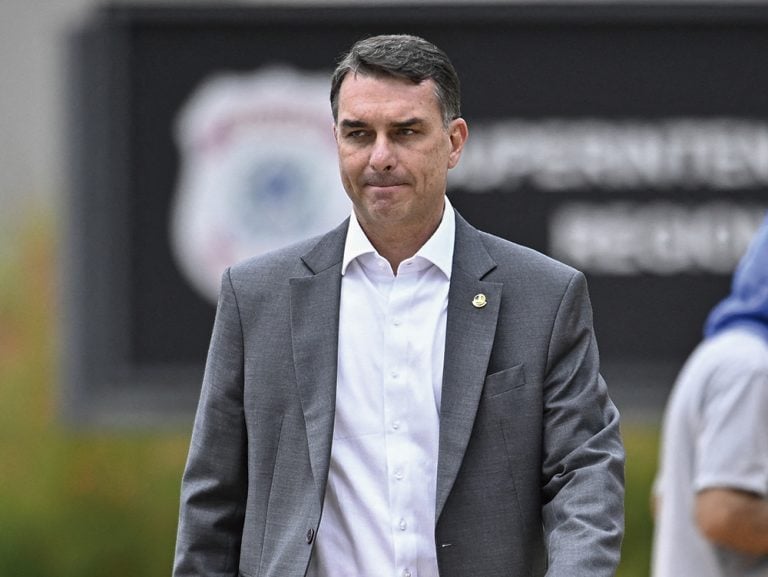
O senador F
ávio Bolsonaro usa a candidatura presidencial como moeda de troca da família – Imagem: Ton Molina/AFP

Em uma reunião três dias depois de Flávio ter se colocado no páreo, os presidentes do PL, Valdemar Costa Neto, do PP, o senador Ciro Nogueira, e do União Brasil, Antonio Rueda, combinaram: todos apoiariam a votação de uma lei de redução de pena para os golpistas. Não por coincidência, o filho 01 havia anunciado aos quatro ventos que a sua candidatura tinha um “preço”. “Todo mundo sabe que a direita quer o Tarcísio”, afirma Paulo Teixeira, ministro do Desenvolvimento Agrário e deputado eleito pelo PT. “O Flávio colocou a candidatura porque impede uma unidade nesse campo. E, ao impedir essa unidade, exige em contrapartida a anistia do pai. Se houvesse anistia, o candidato seria o Bolsonaro.”

O próximo passo na trama coube a Hugo Motta, o presidente da Câmara dos Deputados. Sem avisar o governo, apoiador de sua eleição para o cargo e contrário ao alívio para os golpistas, Motta marcou a votação da redução de pena, também conhecida como dosimetria. O paraibano, registre-se, é do mesmo partido do chantageado Freitas, o Republicanos, adora um convescote na Avenida Faria Lima, a casamata do “mercado”, e é parceiro de Nogueira. Sua chefe de gabinete, Sabbá Cordeiro, foi assessora do senador e presidente do PP por anos e exerceu a chefia de gabinete quando este comandou a Casa Civil no governo Bolsonaro.


Se aprovada no Senado, a dosimetria será um tapa na cara das instituições. Bolsonaro ficaria menos de três anos em regime fechado – Imagem: Rosinei Coutinho/STF e Sergio Lima/AFP

Após Motta anunciar a votação da redução de pena, ministros petistas conversaram e, com base em informações de bastidor do Congresso, convenceram-se de que se ensaia um acordo para Freitas ser o candidato e Flávio, o vice. Um acordo, prossegue Teixeira, costurado sobretudo por Nogueira e outro pepista, Arthur Lira, antecessor de Motta no comando da Câmara. Na reunião de líderes partidários na qual comunicou a votação, o presidente da Casa colocou na mesa um tema palpitante e de interesse de nove em cada dez congressistas: as emendas parlamentares, o dinheiro para obras inserido no orçamento por deputados e senadores. Foi o que se soube graças a uma conversa de deputados do PDT gravada por uma repórter de O Globo. Os pedetistas falavam do encontro de líderes e comentaram que o paraibano havia solicitado “ajuda” para conseguir do governo a liberação dos recursos. Outra chantagem. Patrocinar a causa bolsonarista poderia funcionar para pressionar o Palácio do Planalto.

Não foi a primeira vez que Motta agiu na surdina e pelas costas do governo Lula. Foi assim na derrubada do decreto presidencial que aumentava em junho o IOF, tributo sobre operações financeiras, na votação da urgência para anistiar os golpistas, em setembro, e na designação de um bolsonarista da gema (e secretário de Freitas) para desvirtuar uma lei elaborada pelo Ministério da Justiça contra o crime organizado. Ao saber que o deputado levaria ao plenário a redução de pena de golpistas, um cacique petista comentou: “Ele escolheu dialogar com um lado da sociedade, o bolsonarismo. Agora vai acontecer na Paraíba o que já caminhava para acontecer”. Motta tenta dar uma força à campanha ao Senado do pai, Nabor Wanderley, prefeito da cidade de Patos. Em um estado do Nordeste, a bênção de Lula faz diferença. O presidente vai, conforme o cacique petista, apoiar os dois rivais de Wanderley: o governador João Azevêdo, do PSB, e o atual senador Veneziano Vital do Rêgo, do MDB.


    Abraçar a pauta bolsonarista é uma forma de Motta pressionar pela liberação das emendas

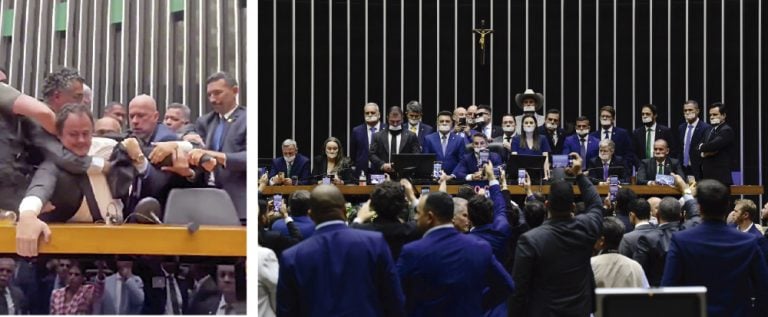
O Planalto deu o troco no presidente da Câmara em outro embate. Além da votação de redução de pena de golpista, Motta mandou ao plenário a cassação de Glauber Braga, do PSOL do Rio de Janeiro, acusado de quebra de decoro por ter chutado um militante do MBL que havia ofendido a sua mãe nos corredores do Congresso. Na véspera de o processo ir a voto, Braga ocupou a cadeira da presidência da Casa e foi retirado à força pela polícia legislativa por ordem do próprio Motta, conforme o chefe dos seguranças revelou a jornalistas. Repórteres foram agredidos do lado de fora do plenário, tinham sido proibidos de entrar. Tudo sem um registro sequer da TV Câmara, devidamente censurada. O episódio custou a Motta uma queixa-crime na Procuradoria-Geral da República por lesão corporal e autoria intelectual das agressões.

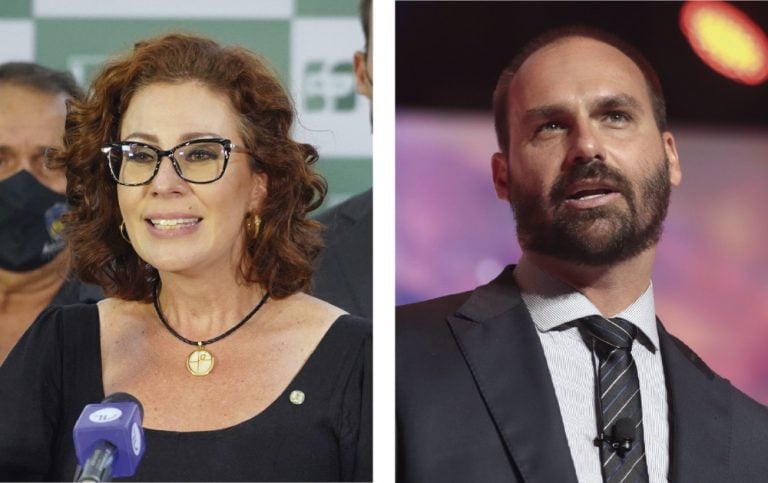
Braga havia feito em abril uma greve de fome contra a perda de mandato e à época recebera uma visita da ministra Gleisi Hoffmann, responsável pela articulação política do Planalto. Um dos secretários da equipe da ministra, André Ceciliano, atuou para o psolista escapar da cassação, conversou com vários deputados. E conseguiu. O acusado foi punido com seis meses de suspensão, o que mantém seu direito de disputar a próxima eleição. Será substituí­do nesse tempo por Heloísa Helena. A ­deputada bolsonarista Carla Zambelli, do PL paulista, preservou o mandato na mesma sessão, apesar de ter sido condenada a 15 anos de prisão em dois processos diferentes pelo Supremo Tribunal Federal. Para a Corte, a cassação da parlamentar, presa na Itália à espera de uma decisão sobre sua extradição, deveria ser automática. Confusão à vista entre Câmara e STF, algo que se repetirá no caso de Alexandre Ramagem, do PL do Rio, condenado a 16 anos de prisão na mesma ação penal de Bolsonaro e foragido nos Estados Unidos.


Os indígenas acabaram arrastados para o meio da contra-ofensiva do Parlamento. Amin não descarta a anistia ampla, geral e irrestrita – Imagem: Fernando Frazão/Agência Brasil e Zeca Ribeiro/Agência Câmara

Com a aprovação da dosimetria por 291 votos a 148, a pena de Bolsonaro pode cair de 27 para 20 anos. E o tempo efetivo na cadeia, em regime fechado, de 7 para 3 anos. Eis a obra do deputado Paulinho da Força, do Solidariedade, autor da versão final do projeto enviado ao Senado. O PT e o PSOL convocaram manifestações para o domingo 14 contra o alívio dado aos golpistas. Os psolistas dizem abertamente se tratar de protestos contra o “Congresso inimigo do povo”. Dias antes, o presidente do Senado, Davi Alcolumbre, do União Brasil do Amapá, havia mandado a polícia legislativa investigar a origem de mensagens postadas nas redes sociais contra o Congresso. Ele e Motta desconfiam ser obra do PT. Lula, comenta um deputado petista, tomou gosto por enfrentar o Congresso. Deu-se conta de que faz bem para o ibope.

Alcolumbre é outro da galeria de chantagistas desta reportagem, impelido por (é o que corre nos bastidores do Senado) sentimentos de vingança em relação a Lula e ao Supremo. O senador prometia votar rapidamente a redução de pena para os golpistas. Graças ao colega Otto Alencar, do PSD da Bahia, por enquanto o plano não deu certo. Alencar comanda a Comissão de Constituição e Justiça, passagem de quase todos os projetos antes de decisões plenárias. O baiano contestou Alcolumbre durante o anúncio da tramitação a jato e cobrou que a CCJ votasse antes do plenário. Na manhã seguinte, com a lei aprovada na Câmara, driblou o presidente do Senado e acertou-se com a burocracia para o envio do projeto à comissão. E designou um direitista, o catarinense Espiridião Amim, do PP, como relator. O parecer deve ser apresentado na terça-feira 17, naquela que deve ser a última semana legislativa no ano. Um governista pedirá para examiná-lo com calma, o que empurrará o desenlace para 2026. Alcolumbre irá contra-atacar?


Estão nas mãos do Supremo, sob constante ameaça, os mecanismos para por fim à farra do orçamento secreto. A Corte irá adiante? – Imagem: Gustavo Moreno/STF

O amapaense comentou no meio de uma sessão que há uma coleta de assinatura entre senadores para o projeto ser examinado em regime de urgência, o que lhe permitiria tirá-lo da CCJ e levá-lo diretamente ao plenário. De quebra, decidiu que, na última semana de trabalho, os senadores poderão votar à distância, sem precisar estar em Brasília. Situação preocupante, segundo um lulista da Casa, para quem Alcolumbre opera no modo “vingança”, atiçada pela derrota na tentativa de emplacar no Supremo o aliado Rodrigo Pacheco, senador pelo PSD de Minas Gerais. Lula preferiu indicar Jorge Messias, o advogado-geral da União. “O Davi jogou muito peso pelo Pacheco”, salienta o lulista, que aponta outra “vingança”, a votação a toque de caixa de uma mudança na Constituição que dá vida à tese ruralista de “marco temporal” na demarcação de Terras Indígenas.

A votação ocorreu na véspera de o STF iniciar o julgamento de ações contrárias a uma lei de 2023 que consagra o marco temporal. Aprovada pelo Congresso, foi barrada por Lula e ressuscitada pelos parlamentares com a anulação do veto presidencial. Havia nascido em circunstância idêntica à de agora, bem na hora de o Supremo julgar a tese de “marco temporal”, que limita as demarcações de Terras Indígenas. O atual relator no tribunal é Gilmar Mendes. Não que este seja um amante das causas indígenas – é dono de terras em um estado ruralista, o Mato Grosso –, mas há dois anos tinha votado a favor delas. E foi quem deu recentemente uma liminar para dificultar o impeachment de togados do STF, um tranco indireto no Senado.

Mendes havia fixado duas regras ao examinar ações contrárias à lei de 1950 que trata da cassação de autoridades. Somente a Procuradoria-Geral da República teria poderes para pedir a cabeça de um juiz e a aprovação no Senado precisaria contar com dois terços dos votos, quórum semelhante àquele de processos contra um presidente. Alcolumbre ficou uma fera com a liminar, justificada verbalmente por Mendes como uma espécie de antídoto contra a estratégia eleitoral bolsonarista de tomar conta do Senado a partir de 2027 e fustigar a Corte suprema. Os dois principais alvos são Alexandre de Moraes, algoz dos golpistas, e Flávio Dino, empenhado em colocar um freio na farra das emendas.


Glauber Braga não contou com a paciência demonstrada por Motta no episódio dos bolsonaristas que ocuparam a mesa da Câmara por dois dias – Imagem: Saulo Cruz/Agência Senado e Redes Sociais

Dino está em uma cruzada moralizadora. Desde 2024 tem tomado decisões que jogam luz e facilitam o rastreio do dinheiro empenhado por parlamentares. Sempre que se depara com pistas de falcatruas, avisa a Polícia Federal. Aconteceu de novo nos últimos dias, diante de outra auditoria da Controladoria-Geral da União. No despacho, anotou ter havido “grave afronta às decisões do STF em tema tão relevante quanto o uso de dezenas de bilhões de reais do Orçamento”. Na condição de presidente de uma das turmas da Corte, agendou o julgamento da primeira ação penal que pode mandar à cadeia congressistas acusados de corrupção com emendas. Será em março. Na mira, um trio do PL: Josimar do Maranhãozinho e Pastor Gil, ambos do Maranhão, e Bosco Costa, de Sergipe.

O que os congressistas mais temem é que Dino leve a Corte a julgar três ações capazes de acabar com a obrigação de o governo liberar os recursos das emendas e o uso do PIX nesses pagamentos. “O Congresso não aceitará retrocessos”, declarou Motta em um debate com o juiz no início do mês. “‘Ah, (o Congresso) não pode ficar com pires na mão’. É verdade, não pode. Mas também não pode roubar o pires. Não pode roubar o prato, o copo, a xícara, a colher”, rebateu Dino. Em setembro, o togado requereu à ­Advocacia-Geral da União e à Procuradoria que se manifestassem pela última vez nos processos sobre a impositividade e as emendas PIX. Em tese, está autorizado a pedir ao presidente do Supremo, ­Edson Fachin, que marque a data da decisão plenária. Um julgamento “apocalíptico”, anotou Dino em junho, em Portugal, em razão do previsível terremoto nas relações entre governo e Congresso. Adendo: na quarta-feira 10, após o Senado acenar com uma mudança nas regras de impeachment dos magistrados, Mendes suspendeu a própria decisão de limitar à PGR o poder de solicitar as cassações.


    Alcolumbre manobra para votar a dosimetria em regime de urgência

Edinho Silva, presidente do PT e ex-ministro, vê um “desarranjo institucional” provocado pelo gigantismo das emendas. Um “desarranjo que descaracteriza o presidencialismo” e fica patente, segundo ele, quando há um mandatário forte como Lula. “Não concordo com as emendas impositivas. O fato de o Congresso Nacional sequestrar 50% do orçamento da União é grave erro histórico”, declarou em um evento em Brasília. Lula nunca falou sobre resolver o problema no Supremo, mas parece torcer por esse desfecho. Edinho Silva é a favor.

O ex-ministro não leva a sério a candidatura de Flávio Bolsonaro, acredita se tratar de um bode colocado na sala para abrir espaço à negociação da libertação do pai. E, mesmo se fosse para valer, o PT demonstra não se preocupar com os nomes nas urnas contra Lula. “O adversário interessa muito pouco, o que interessa é a situação em que o governo vai chegar”, afirmou o petista em um café da manhã com jornalistas em Brasília. “A candidatura do Flávio tem uma característica: ele não vai ser eleito, mas atrapalha demais os outros concorrentes do mesmo campo, que vão ter de lutar para ir ao segundo turno”, afirma o cientista político Leonardo Avritzer, professor aposentado da Universidade Federal de Minas Gerais. “O Flávio é o menos carismático e o mais vulnerável dos filhos do Bolsonaro. Tem telhado de vidro, por causa da ‘rachadinha’ e da mansão de Brasília.”


Zambelli, condenada à prisão, não foi cassada. A Câmara continua a bancar um traidor da pátria – Imagem: Gage Skidmore e Pablo Valadares/Agência Brasil

“Rachadinha” é nome folclórico para “peculato”, a captura de dinheiro público por quem deveria zelar por ele. O crime foi imputado ao senador pelo Ministério Público do Rio em razão da descoberta de que ele, quando deputado estadual, embolsava parte do salário de funcionários do gabinete. Nesse enredo, sepultado pelo Judiciário sem um julgamento de mérito, desponta o capitão da PM Adriano Magalhães da Nóbrega, miliciano, matador de aluguel e bicheiro morto em um cerco policial na Bahia em 2020. No ano seguinte, Flávio comprou uma casa de 6 milhões de reais na capital brasileira. Metade do dinheiro veio de um empréstimo mal explicado do BRB, o banco estatal de Brasília metido no escândalo do Master. Um dos maiores doadores de Bolsonaro na campanha de 2022 foi o cunhado do dono do Master. Idem com Tarcísio de Freitas.

E o governador paulista, concorrerá a presidente? “Ele vai raciocinar até o último momento se vai se licenciar do governo de São Paulo e arriscar o que hoje é a fortaleza deles”, aposta Teixeira. O Diretório Nacional do PT reuniu-se depois de Flávio declarar-se presidenciável e analisou o quadro político. O documentoas  divulgado após o encontro não cita o senador, mas menciona o governador. Os petistas torcem para Freitas concorrer ao Planalto. Acham mais fácil carimbá-lo de representante do “mercado”, dos bancos, dos ricos. Registre-se: o dólar subiu e a Bolsa de Valores caiu no dia do anúncio da candidatura do filho 01 justamente por causa das preferências da Faria Lima. O PT imagina ainda que sem o ­atual governador na disputa em São Paulo haveria chance real de tomar a “fortaleza” inimiga, ou com a postulação de Fernando Haddad, ministro da Fazenda, ou a do vice-presidente Geraldo Alckmin.

A ver como evoluirão as negociações pelas bandas dos chantagistas. • 


CARTA CAPITAL  

December 7, 2025

Patti Smith on the One Desire That Lasts Forever


Life lessons from the “Godmother of Punk.”

Ezra Klein 

  Back in 2010, I picked up this book that everyone seemed to be reading that year: Patti Smith’s “Just Kids.” Smith is an artist who is sometimes called the godmother of punk.

Man, did I love that book. It’s one of the few I’ve read many times since.

“Just Kids” is a memoir of Smith’s early years in New York and her relationship with the artist Robert Mapplethorpe. They were involved in the city’s art scene of the 1960s and ’70s — living in the Chelsea Hotel, bumping into Bob Dylan, Allen Ginsberg, Janis Joplin, Jimi Hendrix and Andy Warhol.

It’s a moment of creative ferment that I wish I could have seen and touched, even if just for a day or an hour.

But the beauty of “Just Kids” — the reason I think it worked for so many people and won the National Book Award that year — is that it’s one of those rare books that makes you feel what a moment like that must have been like. And feeling, to me, is the startling quality of Patti Smith’s music and writing. She makes you feel what she felt. She channels moments rather than simply describing them.

Reading her makes me interested in what life must feel like to her: What is it like to go around in Patti Smith’s mind, to be that open to experience and energy and intuition? What is the texture of the world that she lives in?

Smith’s latest book is “Bread of Angels,” another memoir that encompasses a much wider range of her life. It’s much more personal in a way — and also much more experiential. I loved this book, too.

Smith also writes a Substack these days, and right now, she’s on tour celebrating the 50th anniversary of her iconic album “Horses.” She’s someone who has stayed vibrant across many different eras of American art, and so I think she’s someone to learn from.

Ezra Klein: Patti Smith, welcome to the show.

Patti Smith: Thank you. I’m happy to be here.

You seem like you were a wonderfully unusual child. Tell me about the time you spent a morning talking to a tortoise.

Well, I suppose I was unusual, and when you’re a child, you don’t really understand that. You’re just who you are.

The girl from “Pan’s Labyrinth” reminded me very much of myself because she freely spoke to nature, whimsical characters, elves, fairies. I was very much like that — in contact with other worlds because I was completely open to them.

And once, when I was about 5 or 6 years old, I was on the way to school and took a shortcut through the forest. There was a little pond. I sat there for a moment, and a huge snapping turtle crawled out of the water. He was, to me, giant — the king of tortoises.

We looked at each other for a long time and just communed. It wasn’t unnatural to me because I communed with my siblings that way, without words. As a child, it seemed totally natural to commune with an animal, a dog, a massive snapping turtle, your brother and sister, without words.

But I must have been there a long time in tortoise consciousness because when I finally got to school, everyone was in an uproar. They thought I had been kidnapped because three or four hours had gone by.

I can’t tell you what we talked about. It has always been a mystery. But I can say with absolute certainty that we did have quite a journey together.

What did that feeling of communion — be it with tortoises or siblings or others — feel like to you, and are you still able to access it now?

Yes. It’s different now because when I was young, it was completely innocent. It was just what we did. Now I’m more aware of it.

For me it’s just a way of channeling vast consciousness or another human being, sometimes consciously, sometimes unconsciously. But it even has a lot to do with improvisation, channeling onstage, feeling the people, getting a sense of the people, getting a sense of a character that I’m building in a song, getting within them. It’s just something that I do.

I used to speak with William Burroughs a lot about this. He saw it as very shamanistic. But I was always embarrassed when he would say that to me because I was only 22, 23 years old, and I certainly didn’t feel like I deserved being called shamanistic.

This kind of thing was something he avidly believed in. Also, because we both had scarlet fever and suffered fevers as children, he felt that people who suffered a lot of fevers when young had a more open consciousness.

I think it’s also just a form of empathy, imagination. I can’t really break it down. It’s just a blessing that I have.

It’s interesting that the word “shamanistic” just came up. When we were preparing for this episode, we talked to the music journalist Caryn Rose, who has written a wonderful book about you, and she used the term “shamanistic.” We were then trying to track down whether Bruce Springsteen had used the term “shamanistic” around you.

Why do you think other people perceive you or something you do as shamanistic?

When I started performing publicly in the very early ’70s, I wasn’t a great singer. I’m not really a musician. I didn’t have any real experience. I really came to performing through poetry, but I was a very fluid improviser.

I would sometimes, whether it was at CBGB or a poetry reading, just go into a state where I could do long solos.

I always likened it to saxophone solos. You think of Coltrane or someone doing a long, 14-minute solo: They go out as far as they can, talk to God if they can and then return. And, of course, I always returned.

I’m not very analytical, so I never thought about it. It was just what I did. And that’s what people said. I find it flattering and sometimes undeserved, but I don’t know what else to call it.

That story about the tortoise leads to a story that I found very moving as a parent. People at the school were worried about you. You come in very late, you get in trouble. Your parents are called, your mom is worried. She asks you where you have been. You say that you’ve been “nowhere.”

There’s a big fight, and eventually your father asks you to show him your nowhere. Tell me about what you showed him and how he sort of knew to ask that. That’s a beautiful move as a parent.

My mother was very reactive. She was traumatized when she was young over the Lindbergh baby kidnapping. She was haunted by that, and she was always afraid we’d be kidnapped. She worried about things like that, and she worried about me because I was always wandering off, always going where I wasn’t supposed to.

My father was more open to my ways, but he understood my mother’s concerns. My father was not reactive — he was a very measured man.

So he took me for a walk. I just took him to the pond, and we sat on the rock. I told him exactly what had happened and told him I was talking to the tortoise, but without words, for a long time. And he said: Oh. And I said: Maybe he’ll come out again.

We waited for a while, like 45 minutes, but the tortoise didn’t come out. So we just sat there, and we didn’t even talk. It was such a pretty place. He held my hand. My father was also quite the dreamer, and I think that my father didn’t find that very strange.

He was a very interesting man, and he had a very flexible mind. We just walked back, and he said: All right, I’ll just tell your mother that you were just daydreaming and lost track of time. And I said: Will you tell her about the tortoise? And he said: No, let’s keep that to ourselves.

And we never spoke about it again.

You gave an interview some years ago where you said something about your father and his mind that I found quite beautiful. You said that he believed that the mind was a country, and you had to develop it. You had to build and build and build the mind. That was his whole philosophy — the development of the mind.

What did he mean by that — or what did you take him to mean by that?

Well, my father studied everything. He read various things. He read the Bible, the Old Testament, the New Testament. He read books on ufology. He read Plato and Aristotle. He read Jung.

He was a factory worker. He didn’t finish high school, but he was always searching and asking: What is the meaning of life? And asking different people. If any religious organizations came to the house, he loved to talk to them, spar with them, see what their ideas were.

It’s learning. It wasn’t building palaces. His country of the mind was after answers to very unanswerable questions. He was always probing: Why are we here? Who put us here? What is our purpose?

I developed a love of study, a love of personal evolution. Even if my goals were different, that idea always stayed with me.

You write in your book that you were a very inquisitive kid — inquisitive kids can be a lot for a busy parent to deal with — and that you had found your mom had written down some of the questions you had asked, scrawled in the margins of something: “What is the soul?” “What color is it?”

Yes, I was 1½. [Laughs.] Because I was a bit precocious, my mother got me in Bible school very quickly, but they couldn’t answer the questions, either. So even when I was 3 years old, I was understanding that I wasn’t going to get these answers from other people — I was going to have to figure out these answers myself.

You tell a story in “Bread of Angels” about a family trip to the Philadelphia Museum of Art and the way it evoked in you the realization that you wanted to be an artist.

What did you feel that day? What did the recognition of that calling feel like?

It’s one of the great mysteries of my life. I was 12. I saw art in books — mostly religious art. It was the first time I saw art in person, and it was just such an experience.

But it was more like appreciating beauty at first — looking at the John Singer Sargents and Modiglianis. But then I went down to this one hallway where there were Picassos. I don’t know what happened. There were some Harlequins, some pieces from Picasso’s Blue Period, Rose Period and then Cubism — more attuned to the “Demoiselles” period.

Something about seeing these Cubist paintings struck me so deeply — as if I was struck, really struck, by lightning in my heart. It was completely unexpected. Like, really, love at first sight. Maybe it’s because they’re multidimensional or something, I don’t know. But when I saw his work, that’s what I wanted to do. That’s what I aspired to do.

And it has never diminished. I was just in Madrid, and for the 10th time went to see “Guernica.” I went before a concert so I could sit with it for a little while and see it again.

That’s what I wanted. I wanted to be in that world. I wanted to do that. I didn’t even know what “doing that” was. I was only 12. But it suddenly meant more to me than anything — except maybe my books.

What does it feel like to you now to see “Guernica”?

Usually, when I see it, I just feel grateful that Picasso did it. And I’ll look at it in different ways. I’ve written poems about his painting it. I’ve deconstructed it in my mind.

When I saw it this time, it was more painful because I could liken it to all the images I’ve seen of Palestine, all the pictures of Gaza — all the rubble, all the destruction and all the children dead. So it was a lot more painful to look at it this time because it struck a rawer nerve.

But every time I’ve seen it, I’ve felt something. It’s always meaningful.

What strikes me about some of these stories — and a reason I’m always fascinated to talk to artists about the feeling of being called toward art — is that it was pretty natural for you to be able to feel that at 12.

I’ve read biographies of Picasso and have tried — probably the wrong way — to deepen my appreciation of art over the years. But I still struggle with going to a museum and walking past masterful works that so many others have felt so much about — but not feeling anything.

Well, there’s nothing wrong with that. There are books that people love, there are movies that people love, that I feel nothing for. I don’t think that there are any rules and regulations that way. We’re drawn to what we’re drawn to in life.

I was drawn to books at 3 years old. I saw books, saw my parents reading them, and that’s what I wanted. I wanted to read. I begged my poor mother, who was a waitress who never finished high school, to teach me to read. But my siblings weren’t like that. My friends weren’t like that.

There is no requirement to have to stop in front of a Rembrandt and feel deeply. If you don’t, it just doesn’t speak to you. But there are other things that most likely speak to you that probably might not speak to me or speak to another person.

I wouldn’t fault anyone for not being moved by art or by a certain piece of music. It’s a very subjective thing.

What’s your first memory of reading?

My first memory of a book is I was fascinated with this red book my mother had. It had a red silk binding and gold stamping. I was about 3, and I hid it under my pillow because I thought if I slept on it, what was in it would come into my head. And my mother was distraught because she couldn’t find it.

It was my grandfather’s book called “Foxe’s Book of Martyrs.” It was a book with stories of poor martyred saints.

I’m sure when my mother started teaching me to read it was the normal Mother Goose or something. But I swiftly started reading books and was reading children’s classics like “Uncle Wiggily” and the “Bobbsey Twins” and “Pinocchio” and “Alice in Wonderland” and all the elves and fairy books. I’ve read them all, really.

Reading through your memos, you really get this beautiful biography of your life as a reader, too, and the authors who have meant so much to you. When you think about some of the books that were formative to you or some of the authors to whom you keep coming back, what are they or who are they?

“Pinocchio” was very important to me because I always knew I was a wayward kid. I wasn’t evil, but I didn’t always do what I was supposed to. I could relate to his desire to explore, but it’s also a redemptive story. It gave me hope as a kid.

He was a bad puppet, a bad son. But in the end, he saved his father. He gave his puppet life to save his father and was redeemed by becoming a real boy. So there’s redemption, and it gives one hope, even at 7.

And I love “Peter Pan,” of course, because I didn’t want to grow up. That was hope for a new place — Neverland — where you didn’t have to grow up.

When I wanted to write — but really wasn’t sure if I could ever write — I readLittle Women.” Jo March, of course, was an early hero — a girl who wrote, a girl who was sort of a tomboy, who didn’t like the fuss and feathers of being a girl and wanted to be a writer.

So I was very lucky to have many books to help me on my path.

I remember as a kid getting a book that had the fables and stories I knew, but it was an older version of them, and realizing with a thrilled delight how much darker and more menacing and more grotesque they often were.

Now I find myself reading to my children, and when I read them today’s books for their age group, they’re very funny, but they’re toilet jokes. Then, when I try to go back to read the classics to them, it feels somehow so culturally different. I have to go through this constant negotiation with myself: What am I going to tell them about? Which parts of this am I going to sanitize?

It feels like we believed children were more capable of absorbing a more extreme version of life, death, heroism, heartbreak and terror a couple of decades ago than we do today.

Yes, like you, there were the German versions of Grimms’ fairy tales that were very grim.

That is literally the book I’m talking about. [Laughs.]

Very grim, very dark. But I also accepted them as what they were: fairy tales. They weren’t real. I had a sense of the imaginative world and our social world.

I think that kids really have the ability, at least when I was young, to know that things weren’t real. You look at cartoons back then, Bugs Bunny or Daffy Duck: They wrap dynamite around their head, and then their head explodes. Then they’re fine in the next cartoon. It wasn’t like we really thought that was happening.

I think that fantasy — maybe because we were always playing outdoors and we lived a different life — but the realm of childhood was akin to imagination and fantasy.

The book that really was disturbing, for me, was the Old Testament because I started reading it very young, and we’re supposed to accept the things in it as real and the people in it as real people.

You become very enamored with King David, the shepherd boy. You love him, and he does all these wonderful things. Then he wants someone else’s woman and sends the woman’s husband to the front lines to be killed.

As a young kid, 10 or 11 years old, I even asked my father about it. There are so many bad things in the Bible: people having 20 wives, someone’s wife is too old to have a baby so they have a baby with a younger person. I said: Daddy, there’s so much bad stuff.

It disturbed me. It confused me.

It was really when I had to face — my father would always quote Burns — “man’s inhumanity to man.” It’s a very real thing.

And what I think is more frightening to kids than whatever stories or books they’re reading is the news. The news is terrifying. What is the news telling us? What our leaders are saying is really disturbing.

I’m sorry that this was such a convoluted answer.

Oh, no, I agree with you. I find the news more terrifying than anything I read.

How could I explain to a child the duplicity of our present administration? The hypocrisy. There are so many dark things.

Good luck. Blessings upon you and your children. [Laughs.]

Thank you very much. I agree with you, by the way, that the Old Testament was a very hard book for me to read. When I was in third and fourth grade, I went to an Orthodox Hebrew school, and we read a lot of the Old Testament, and the instruction was to take it quite literally.

And in being told to take it quite literally and then trying to match that up to the way I had been told to understand God and told to understand spirituality —

And morals.

Yes, and morals. Seeing how little mercy there often was in that book, it honestly put me off religion and spirituality for quite some time. I was young, but to match those two things up was already too difficult then.

It’s interesting that we both suffered the same kind of questioning — and it wasn’t frivolous questioning, either. It wasn’t rebellious. It was true thinking.

Deeply earnest. [Laughs.]

Yes. “Deeply earnest” is a good way to put it.

Let me stay on, not the religious side, but the fairy tale side for a minute. You write about the book of Irish fairy tales that belonged to somebody you had cared about when you were young and who passed away. Your sister found a version of it for you as an adult.

A passage of that book that you wrote about said, “All desires save one are fleeting, but that one lasts forever. That was the desire for wisdom.” And when that character was asked what to do with that wisdom, he said, “I would make a poem.”

I know. I just love that so much.

Well, I read that, and having read your memoirs, that almost felt like your whole path.

I used to ask a very old Irish woman — the great-grandmother of a neighbor, named Aggie — to read me that over and over — which she did. She didn’t mind at all.

And I had forgotten it. I had forgotten it because I was 5 years old when she died, and after that, the book disappeared. I never saw it again. And truthfully, I’m ashamed to say that I had totally forgotten the passage.

When my sister researched, found the book and sent it to me — when I read that page, I felt almost that feeling of just being hit in the stomach. It was very powerful. It was like I reverberated right back to that child and remembered how it made me feel — yet I didn’t really know why.

It’s another one of these great mysteries: Why did that particular passage strike me so much when I was kindergarten age? But it did, and it probably, as you said, has something to do with being one of the main stones on my path.

I think so many people would hear that and think: If you had all that wisdom, why, of all things, a poem? What could a poem contain? And my sense is that you do have a sense of why a poem and what a poem could contain.

So why a poem?

It’s like the bread of life, a poem. I’m not an analyst. I can’t really break these things down. It’s just that, for me, true poetry is the hardest and the highest thing to write. There are a million poetry books and poet laureates and poetry prizes. But I’m talking about something that’s so exceptional that maybe a great poet — Rimbaud or Sylvia Plath or Dylan Thomas — only writes 10 of them.

But if you get the greatest of poems, it can distill everything like a teardrop. If you’re thirsty and you get that drop of water, it suddenly becomes like a liter of water. Then you’re satisfied. And that’s what a poem can do.

You went to New York City in the late ’60s. What did New York City feel like to you when you arrived?

Freedom. I had lived in South Jersey, and it was very rural in my area. There were no cafes, no galleries, no bookstores. You could walk to the library on a rainy day in South Jersey and see one person, some cows or a pig that escaped the pig farm.

I went to a very cool high school. It was extremely diverse and interesting, and I learned a lot from other kids. We were listening to Coltrane and then listening to Bob Dylan, and I read a million books and all of that, but it was a rural area. There was no real culture except for the culture of rock ’n’ roll and R&B — music that I shared with my classmates and friends.

But New York at the time, in 1967, was filled with young people. It was really cheap to live there. It was gritty. It felt safe. It was all this activity, energy — Washington Square Park and political activists and poets and people playing bongos. It was action.

It wasn’t like now. Down in the East Village and the West Village, it was mostly young people and creative people. You didn’t have any fancy stores or things like that. It was a place where you could evolve and grow and where nobody cared.

I didn’t have the look of my time — the beehive and lots of makeup. I had long straight hair — sort of a beatnik Joan Baez-looking kid. I just didn’t fit in anywhere. I was always such a weirdo.

But in New York, nobody cared. I was more of a hick in New York than a weirdo because my clothes were a little off.

But it was free. I could just walk around and be who I was. I didn’t have any money. I was often quite hungry until I got a job. But I was happy. I was happy because — I can’t say it enough — I just felt free.

I like reading memoirs of artists in New York City. It’s a genre I particularly love. But most of my work is in politics and policy, and I particularly do a lot of work on housing. And when I read them, some part of me always thinks: What you are seeing are the benefits of cheap housing.

So often these books seem to me like a memoir of what is possible when you can afford an apartment in New York City.

No, but you’re also seeing the benefits of less greed. It’s not just cheap housing.

We could get into a very unhappy discussion because you and I are on different sides of the fence on certain aspects of that. As you might know, I’ve been spending quite some time with my daughter, Jesse Paris Smith, and Joseph Reiver trying to save the Elizabeth Street Garden.

So I can’t get into a discussion with you about that because we have different ideas.

Fair enough.

Especially the cavalier way in which it’s treated — as if we’re a bunch of frivolous something. It’s a beautiful, beautiful place for children and people.

I’ve lived in New York since 1967. All the developments in New York are mostly corrupt. We have all this office space that’s completely empty. Whole empty buildings. And we just keep building them and building them.

I know that we need housing, but that’s not going to change the fact that in Greenwich Village, where it used to cost $110 or $150 for an apartment, the same apartment is $7,000.

It’s not going to change all the loopholes and stuff that these landlords and people have done. It’s not going to change the fact that places are filled with mold, but landlords don’t have to fix it. All my friends who have lived there since the ’60s moved out of New York because of the rent. You have a place, and your lease is up, and then they triple it. Just building some new space for 200 people is not going to change things. What we have to change is what’s going on with how much things are.

That’s what I’m concerned about. Not concerned about: Let’s get rid of these garden spaces that are taking up valuable space that we could develop. Some of that might be important, but it’s a way bigger issue than that.

Recognizing that we might see the possibilities here differently, I think we’re actually on the same side of thinking: Something has gone terribly wrong.

Yes. Terribly.

But what was it like finding housing when you first came to New York City? You came without a place to stay. You came without a place to live. What were the places you lived in like?

Well, one — right before I recorded “Horses” — I think it was ’74 — I needed an apartment and wanted to go to the East Village because the West Village started getting a little expensive.

So I walked down East 11th Street, not far from the church, more toward Second and First Avenues. And there’s some old guy sitting in front of a building — the super. You always knew the super — the supers were always there.

“Do you have an apartment?”

“Yeah, I got one. It’s on the sixth floor. Go look at it.”

You have to walk up six floors. It has a tub in the kitchen. There are cockroaches all over the place. But you could fix it up.

Go back down. “How much?”

“One hundred fifty dollars, but I need two months.”

“All right. I’ll come back.”

You shake hands, and you got an apartment. That’s what it was like. And it was a [expletive], but it was your [expletive], and it was up to you to fix it up.

There were a lot of abandoned buildings. People squatted, or they would pay cheap rent. And they had cold-water flats. They didn’t have electricity. And these artists slowly started making them better, making them nicer, making them livable.

Then, eventually, they get priced out. This is, sadly, what happens.

But it was great then. Because you got the rats and the cockroaches and the mold or whatever, but if you were resourceful, you could work with that. You could get a job as a waitress. You could get a job in a bookstore, pay your rent and have at least enough to eat.

I’m living in this world. I’m not fantasizing about living in my old world. But there were some aspects of it I do mourn. I mourn some of the innocence and the possibilities.

Right now, whether you have a little affordable housing here and there, it’s not going to change the fact that you have to have a lot of money to live in New York. You have to.

I’ve read “Just Kids.” It’s one of those books I’ve read repeatedly, and I know a lot of people for whom that’s true.

One of the reasons I think is that a lot of us sort of wish we had been there in that moment. It feels like a moment that was special. And your books sort of evoke it. They allow you to feel it.

It was a scene. You describe it in “Bread of Angels” as:

Looking back, the burgeoning scene was breathtaking, art rats embracing then breaking apart a vast cultural history, scurrying into the future with speedy and productive energy.

What to you made that moment that moment? We’ve talked a little bit about New York at that time, but why was the artistic moment so generative and now so legendary?

It was a very pivotal time. For one thing, because of the feminist movement, because of the gay movement. The fact that you could come to New York if you had new ideas. You could come to New York if you were homosexual. You could come if, like me, you were the weirdo.

It sort of accepted everyone. The Statue of Liberty was our girl because so many kids in America were disowned by their families for being homosexual, wanting to be a poet, wanting to be an artist. That wasn’t an accepted profession. You could be disowned for wanting to be an artist or a poet, let alone having a sexual persuasion that was against anything they believed in.

So New York was filled with misfits, people who weren’t accepted — including myself and Robert Mapplethorpe and Jackie Curtis. There are so many, many of them dead — so many gifted people, so many tragic people, at the same time.

In terms of what brought us together, I think it started with music. We were all listening to the same music — whether it was “Sgt. Pepper” or Bob Dylan or Neil Young or Janis Joplin, whatever. We were all — or most of us were — against the Vietnam War. All, of course, for civil rights, human rights, gay rights, women’s rights. We were young and conscious that these were rights that we all believed in. There was a kinship. So it was a very unique period.

But I don’t like painting things like it was the best era ever, so that young people in future generations feel like they missed out. Because that’s not fair. Being alive in present tense is the greatest thing you have.

One thing that strikes me about that time when I think about it, the way you talk about the music of it, Robert Mapplethorpe, who is such a central figure in your life and such a central artist — it’s a moment when art is taken very, very seriously.

Even compared to other times in American history — the music of Bob Dylan or the Beatles, the conceptual art of Andy Warhol — there is something about the culture’s relationship to art in that era that feels distinctive. Not just the art being produced but the seriousness with which it was received and lived out. I don’t feel like I know why it’s true, but it feels true.

That’s really interesting. Yes, there’s truth in that when I think about it. It’s like “The Journey to the East”: It was just one of those moments where a lot of people converged, and even if we didn’t always get along or there was pettiness or this or that, we were still like minds.

When I was working at Scribner’s, I waited on Larry Rivers, I waited on Robert Rauschenberg, I delivered books to the building where Mark Rothko lived and saw him on the elevator.

You saw these people. They were there. You knew where their studios were. Jimi Hendrix’s studio was across the street from where Lee Krasner and Jackson Pollock painted. Art was everywhere. Andy Warhol ate in the same restaurants as we did. We all comingled more.

I sometimes joke: Janis Joplin was staying at the Chelsea Hotel when I lived there. We dressed similarly, only she had feather boas. We lived in the same hotel, only she had a bigger room. She had a suite of rooms, and I had the tiniest room. Other than that, we were all similar.

We dressed similarly, we listened to the same music, we had the same references. Art was like the jewel in our crown.

I just had this other thought that might be far-fetched: We were from the generation that had President Kennedy and Jacqueline Kennedy. When I was a kid, Eisenhower was president. But then you had President Kennedy and his wife — very connected with the arts, opera, ballet, fashion. They elevated the idea of culture in the American consciousness and also among young people.

For a brief time, that was our world, that was our president.

Archival clip of John F. Kennedy: Behind the storm of daily conflict and crisis, the dramatic confrontations, the tumult of political struggle, the poet, the artist, the musician continues the quiet work of centuries: Building bridges of experience between peoples. Reminding man of the universality of his feelings and desires and despairs. And reminding him that the forces that unite are deeper than those that divide. That’s art. And the encouragement of art is political in the most profound sense.

It did something. It was at least a subconscious influence. But, like I said, sometimes in talking about all of this, I don’t ever want it to seem like we’re living in End Times.

New things are being done constantly. New books are being written, new films are being made. And I always pin my faith on youth.

What was Andy Warhol like?

I didn’t particularly like him so much when I was younger. But I really appreciated him, especially when I was older. His “Last Supper” series, I thought, was brilliant.

But that was a world that really didn’t interest me. It could be a very competitive and petty world where a lot of really interesting work came out of. Sometimes the atmosphere just felt very high school to me.

I was more of a Holden Caulfield kind of kid. I really was. I used to think of myself as Holden Caulfield at the Chelsea. I was just some gangling St. Bernard jumping into the Chelsea Hotel, and there were hierarchies of people. But that’s a whole other subject.

Well, you come in, as you say, a sort of Holden Caulfield figure. You’re then known by others as the poet, and you become a very famous musician, and you release records.

But I’ve heard that you describe yourself as a poet and as a performer but not so much as a musician. So I’m curious about your sense of your own identities in that period — which ones you adopted and which ones you didn’t.

I never, in my life, considered myself a musician. I don’t deserve to be called a musician. I don’t think like a musician. I don’t apply myself. I can play really good and really loud feedback. I can write a song with a few chords. But I’m not a musician. My kids are musicians. My husband was a great musician.

I’ve been called so many names. When I was young, I was the queen of punk. Then I got too old, and I was the grandmother of punk or the godmother of punk. They always have a name for you — the poet laureate of punk.

What do all these things mean? I always tell people: If you want to call me something, call me a worker. Because that’s what I do. I work every day and try to do the best work I can.

I don’t say I am not a musician out of modesty. I’m just not. I’m a performer, and I think I’m a good performer and a strong performer — but not a musician.

What makes you a good performer?

Well, I have no fear. [Laughs.] I’m being cavalier, but I feel very comfortable onstage, and I do my best to stay in contact with the people. They’re not going to get perfection — who knows what they’re going to get? — but they always know that I’m aware that they’re there every second.

I don’t play at people, I play for them or with them. But that’s a natural thing.

You gave this performance at The Bitter End in the ’70s. It was your first performance with a drummer. Can you tell me a bit about that night?

That night will always be imprinted on my mind.

There were four of us. We didn’t have a drum, but we were playing in such a high-energy way. We had been playing CBGB, and it was really time for us to get a drummer.

We finally got one: Jay Dee Daugherty. He was only with us for a couple of weeks. We got a job at The Bitter End, and it was our debut with a drummer. So it was quite exciting.

We were at the club, and we were ready and excited. Going onstage — we were gathering a following, and I could feel the support of the people. But that night there was something extra. There was an electricity in the air that I can still access.

It was like nothing that I had felt before. And I thought: Oh, it’s probably because people are anticipating us performing with a drummer.

It was a great night. It was raucous. The people were so effusive and so with us. It was a club, but it was a small triumph. It was exciting.

I got off the stage, and I was filled with adrenaline, and I went backstage, and I heard this voice say [in a gravelly voice]: Any poets back here?

I turned around, and I went: I hate poetry.

It was Bob Dylan. I mean, I love Bob Dylan. Loved him. He was one of my greatest influences, and there he was in front of me.

I thought: Oh, that’s why it was so exciting — because Bob Dylan was there.

But I don’t know why I said that. I felt like a teenage boy — like when you act mean to a girl because you like her.

He just laughed. I always said we circled around like two pit bulls, sizing each other up.

Bob Dylan never went to see anyone. So it was quite a privilege. But I was such an upstart, I couldn’t even act grateful or anything. I was, like: Ah, so what? You’re here. So what?

I think that he understood. He was somewhat like that himself.

After that, everything just went at 78 speed because, for some reason, I felt him in our corner. So that was quite a night. And it was only a few months later that we recorded “Horses.”

Nineteen seventy-five was one of the fastest-moving years of my life, I think. It’s nice now to be celebrating it. Fifty years — that was half a century ago. Half a century ago, that night at the Bitter End. And then recording “Horses” and then going out into the world. And still here.

What has it been like to be out playing that album again?

I’m a person who keeps moving. My favorite thing is the thing I haven’t written, the next thing. But I understand what my task is when we perform it. The record has a lot of meaning to a lot of people, and we do our best to give it to them every night — not by rote but all over again.

It’s challenging, too, because I do it basically chronologically, and I have to open with “Gloria.” So I have to step onstage and start with “Gloria.” I feel grateful because people are still interested in this work that was committed half a century ago. It’s a lot of joy. But even sometimes, on certain nights, it’s — sorry. [Voice breaks.]

So many people are gone: my pianist Richard Sohl, whom I loved, too, was the founding member of the band with Lenny Kaye, and all my friends — Robert, Sam Shepard. My brother, who was the head of our crew. Oh, so many people.

Sometimes when we’re doing these songs, because they were all there then, they come back with such force. [Clears throat.] Sorry.

But despite that, I feel also the joy of celebration — and happy to be here, happy to be physically able to do it, to feel my voice is strong and that I can give the people, as authentically as I can, the experience of the record as a new experience every night. I want everyone who comes in wanting a special night to leave feeling that it was a special night — and not just another night on the road.

We did Europe, and pretty soon we’ll be starting in Seattle and ending in Philadelphia, where I got the bus to come to New York and where all these things unfolded. So it’s sort of fitting that it should end in Philadelphia.

You became big as a touring performer. You have these big records. You’re touring the world. You play stadiums. And this gets us to “Just Kids” and into your newer book: You decide to leave that behind, to move to Michigan with your partner and raise a family.

That’s quite a rare decision — to walk away from that kind of fame at that moment. And you have this line that I’ve been wondering about. You say: “After a time, if not prudent, one reaches a point of being unrecognizable to oneself.”

What about you or about your life had become unrecognizable to you?

I was getting quite popular in Europe. You play in front of 40,000 people, and you get off the stage, and you’re wired up. It was exciting. I loved rock ’n’ roll. I liked being a rock ’n’ roll star for a while. But it wasn’t what I aspired to.

I wasn’t evolving as an artist. I wasn’t writing anymore. I wasn’t evolving as a human being. I’m not criticizing anything. I’m just simply saying this had to do with me. It wasn’t my goal in life to become a rich and famous rock star or become an arrogant [expletive].

I wanted to do something important, hopefully, or something of worth, and I felt like I had to really reassess who I was and what I wanted to do. I left public life behind so I could really get a sense of who I was, what I wanted and to evolve as a human being and to be with the person I loved.

It was a very difficult decision. Very difficult — even painful. But I’ve never regretted it. Because in those next 16 years, I did evolve. Which is also painful because with evolving, you have to shed a lot of things, and you have to reassess who you are, what you have done, where you’ve been careless, how you can be better and get a more empathetic sense of the world and the people around you.

So it was a long learning process.

You open the book “Bread of Angels” with these sentences:

The pen scratches across the page rebel hump rebel hump rebel hump. What do these words mean, asks the pen. I don’t know, replies the wrist.

Throughout the book, you keep coming back to the words “rebel hump.” And it’s clear from the way you do it and the way you write that you don’t know yet what they mean. But they feel like something to you, feel like something so strong that they end up being the refrain of this entire work of art.

Yes.

So when those words came to the wrist, what did they feel like? How did you know there was so much life in them?

I didn’t. I started writing it in this fairly obscure hotel in Nice, looking at the Bay of Angels. I hadn’t written in a long time. I was distraught because I was having a period where I just wasn’t able to write.

Then all of a sudden, I started writing, and that’s what I wrote. So I didn’t question it. I sensed that it was something. I just knew that it had worth.

As I wrote the book, it kept revealing to me aspects of what it was.

There’s a passage from that book I’d love you to read. It starts: “We wage the fever of disappointment.”

[Smith reads.]

We wage the fever of disappointment, the realization that yesterday’s crumbling tower was not a fantasy, that like the Prince of Aquitaine, one is hurled and drawn like a human tarot card. How can we leap back up? Get back on our feet, grab a cart and start gathering the debris, both physical and emotional. Crush it into small stones, then pulverize them and as the dust settles, dance upon it. How do we do that? By returning to our child self, weathering our obstacles in good faith. For children operate in the perpetual present, they go on, rebuild their castles, lay down their casts and crutches, and walk again.

I love that: “Crush it into small stones, then pulverize them and as the dust settles, dance upon it.” And it makes me think of something you did in your own life — where you gave up the life of a rock star.

For a lot of people who do work that happens in front of an audience, whether they’re a writer or a musician or a performer or a podcaster, it’s very easy, as you become more successful, to measure how good the work is by how big the audience is.

I never think like that.

I’m sure you know many people who do, and I am sure there is a seduction in that for everybody. That’s some kind of measurement the world is giving you back.

How did you stay connected to the voice inside of you about whether the work was great — as opposed to the voices outside telling you what was great?

That’s not hard for me because I’m my roughest critic, really. I’ve never measured my worth by performing because it comes naturally. It’s my job to do a good job and connect with the people.

I don’t measure myself by the amount of adulation nor discord or hatred or anything. I don’t let those things affect me. I don’t measure how good my work is by what a critic says. I just do my job, and I perform for the people.

I just want to do something of worth. I want to write a book as good as “Pinocchio.” I want to do one book where I can look at it and go: This deserves the trees that were sacrificed for it.

Do you feel that way about any of the books you’ve written?

I think that in all my books there are some really good things. I can’t say I wrote the perfect book. I’m still trying.

I think it would be horrible to know internally that you have done the best work you can do. That would be a kind of death.

Yes, it would be. You’re right. So let’s say I haven’t made it yet. [Laughs.] I’m still trying.

You write about your life in Michigan:

Our life was obscure. Perhaps not so interesting to some, but for us it was a whole life. Sometimes challenging, yet I could feel my own evolution in slow but real time.

It was painful, as though scrubbing centuries of skin, ash, debris from an unearthed vessel coming at last into its own. rebel hump rebel hump.

Right there, in that passage — what are those rebel humps?

I think that’s more of a cry of: Where are you? Because the rebel hump — it’s many things. Some of the things that I found troublesome about myself were part of the rebel hump. Sometimes, when I had a small victory, the rebel hump glows or shimmers. Some aspects of the rebel hump you want to shed, but the essence of it, for me, is probably one’s deepest creative source, one’s imagination.

Sometimes we feel abandoned. In the New Testament, you even have Jesus feeling abandoned by his father. We all feel abandoned by our muse — in many, many different ways. And it’s a very painful thing, even if you know, because you have great faith, you aren’t abandoned. That you feel abandoned is painful, and it’s a hump that you have to get over.

What is that work like for you? If somebody is listening to this and they want to be a writer, what is the work of becoming better as a writer?

I always tell people it’s like a muscle that you have to exercise every day. I just write every day.

When you’re young, you think: Oh, I’m going to smoke some pot and write a poem. It’s not like that. In the ’80s, when I left public life, I wrote every single day. I struggled. I’d write the same paragraph 10 times because I write everything by hand. But I got to the point where I couldn’t not write. That’s when you know you’re a writer — when you can’t not write.

I could imagine life not performing, not singing, not drawing, not doing many, many things in life — but I could not imagine not writing.

I always think there are two sides to writing. We always focus on what gets written, what comes out of the person. But there’s also what comes into the person.

You have a lovely quote where you say: “That is something I can do, sit quietly, go elsewhere and not return empty-handed.”

How, as a writer, do you not return empty-handed? How do you create what to write with?

I study a lot, and I research a lot and think a lot. I’ll want to write a mystery story about Kyoto in the 17th century, so I’ll do a lot of studying and then maybe, months later, I’ll have all of the material in order to write some type of fable.

But other things, like in “Bread of Angels,” when I was sitting in that hotel, on the little balcony at the Bay of Angels, I had nothing in mind. I was so demoralized and so tired, and I was just looking out at the bay in a sort of circular way. I was receptive, and I was given the words to start the book.

And then when I was struggling to finish the book, I finished a tour in Paris, and I had several days off, and I just decided to go there again. All the burdens and all the beauty floating in that water. And I just wrote it out.

And I finished the book. But this was one of those rare moments where I began and ended something in the same place. Even thinking about it makes me feel very privileged. Those things can’t be planned, nor can they be pushed.

The way you said it was very nice: How does it come to you? Some things come to you. Other things you labor for, you study for. This other magical realm, you can’t really summon it. You can’t demand it. It will come to you.

Jim Morrison was right: “You cannot petition the Lord with prayer.” You can’t say: Great, mighty Bay of Angels, give me the words.

I was just generously given a gift.

There is a mystery to the process. I said a second ago that I always think there are two pieces to it: What comes in and what goes out.

That’s actually not entirely true — there’s this thing that happens in between those two. Some kind of processing of it all has to happen in the middle. And I don’t understand that process in myself. Something happens, and then there is what to work with — but it’s not exactly what came in. That’s the part that I find the strangest.

I’ve become much more respectful of the process over the years, but I still would not say I understand it.

That’s beautiful, and it’s the same thing — it’s sort of alchemy. That miracle area, that unspoken thing that’s our alchemical — I don’t know how else to say it. Because in alchemy you take all of these elements and produce something else. It could be gold, but it could also be some wisdom or enlightenment or just understanding of your own material. But that’s a precious realm, and you’ve articulated it perfectly.

But it also has to be nourished. Years of what you do, years of what I’ve done — we have to develop certain disciplines, and those disciplines come to hand.

It’s all the magic in creation. My mother could transform a bag of potatoes when my father was on strike and there was no other food — just a big bag of potatoes.

My mother would look at that bag of potatoes and think about it, in tears, because that’s all she had to give us. And by the end of the evening, she had created a mystical mountain of the best French fries ever, the best potato pancakes ever, and put it all on the newspaper, on the floor and let us watch “Frankenstein.” Then you weren’t conscious at all of the fact that they were struggling and that we were sort of hungry or that the cupboards were bare. All we knew was the magic that she had created for us.

I love that story as a parent who needs to do a better job of finding that magic for my children sometimes.

One thing I hear in that is that there has to be space to hear the voices. You said she would get quiet and look at the bag of potatoes. There’s chaos all around her —

Smoke a cigarette in tears. [Laughs.]

You discuss in your book about moving to Michigan and being away from the noise of the audience, away from the noise of fame.

I actually do think this is very important when you’re talking about nourishing that internal voice. I often think of it as listening to it. And it gets drowned out. You can become a more sensitive listener or a less sensitive listener. But even if you are a sensitive listener, if you’re listening to everything around you and outside of you, it’s very, very hard to hear.

So what are the conditions for you in which it’s easier for you to listen?

At this time in my life — I’m going to be 79 — I’ve been through all kinds of things, and I don’t really require anything. I can be in a noisy cafe or in the back of a taxicab or sitting on a park bench. I just have a lot of faith now.

I know what I want out of this next stretch of life. I know what I want to do, and I am just grateful for anything that I can do. I know what I want, and I know how I want to spend the lion’s share of my time.

Despite everything that’s happening in the world and everything around us and any frustration or helplessness we feel or betrayal we feel, we have to remember it’s also all right to feel the joy of being alive and feel the joy of your own possibilities. Even in the face of the suffering of so many people around us.

I have to hold on to the fact that I have my own life, and I have duties that I have to perform. I have a family to take care of. But I also have the same calling I did when I was young: to nourish and to do the work that I believe I was given the possibility to do.

I’m not going to let anything shake that faith, no matter what kind of rubble or debris of our time I have to walk through. I believe in my rebel hump. So I’m not going to let anyone destroy it. I’m just going to keep doing my work.

Before I ask for your book recommendations, which is always how we end the show, I want to go back to the beginning to the questions you had asked your mom when you were little, when you realized you had to figure out the answers yourself.

Now, three-quarters of a century later, what is a soul — and what color is it?

I believe it’s the color of water — that’s what I think. I think the soul is the color of water.

And what is the soul? It’s not important to me to know what it is. It’s many things. But I believe in it. I believe it’s an energy that will keep traveling even when breath is gone. I’m hoping to keep traveling. I’m hoping to see Fred somewhere.

I don’t have any particular system. My system has no system at all. When I think about the first moment I saw Fred and how I knew he was the person — I can still access that. I can still access what it felt like to look at Picasso at 12. And I can still access how I felt hearing Bob Dylan for the first time. They remain within me. And I can still access joy.

And then, always our final question: What are three books you’d recommend to the audience?

Oh, my gosh. My head is swirling so much with a million books. But just for a little continuity, I would say read “Pinocchio” and “Frankenstein.”

There are two creators who have created life: Geppetto creates the naughty puppet who redeems himself. And then Mary Shelley writes “Frankenstein” — truly a masterpiece. Two different takes on creating, being an almost God figure and creating life. And “Pinocchio” because it’s redemptive.

And I would say always read some poetry by Sylvia Plath.

Read “2666” because I think it was our first 21st-century masterpiece.

By Roberto Bolaño.

Yes. I think it’s just brilliant.

I love so many books — it’s a terrible question to ask me. But “Pinocchio” is my go-to book. I’ve read it a hundred times. And that was always my dream — if I could write a book as good as “Pinocchio,” then I could say: OK, I did my job.

So I’m still working on it.

Patti Smith, thank you so much.

You’re welcome. Thank you.

THE NEW YORK TIMES